

Short answer: if you want to manage your woodland deliberately rather than react to the next fallen tree, failed access track or surprise felling constraint, a woodland management plan is usually worth having. But a plan is not a substitute for urgent practical work - and practical work without a plan can become an expensive series of unrelated jobs.
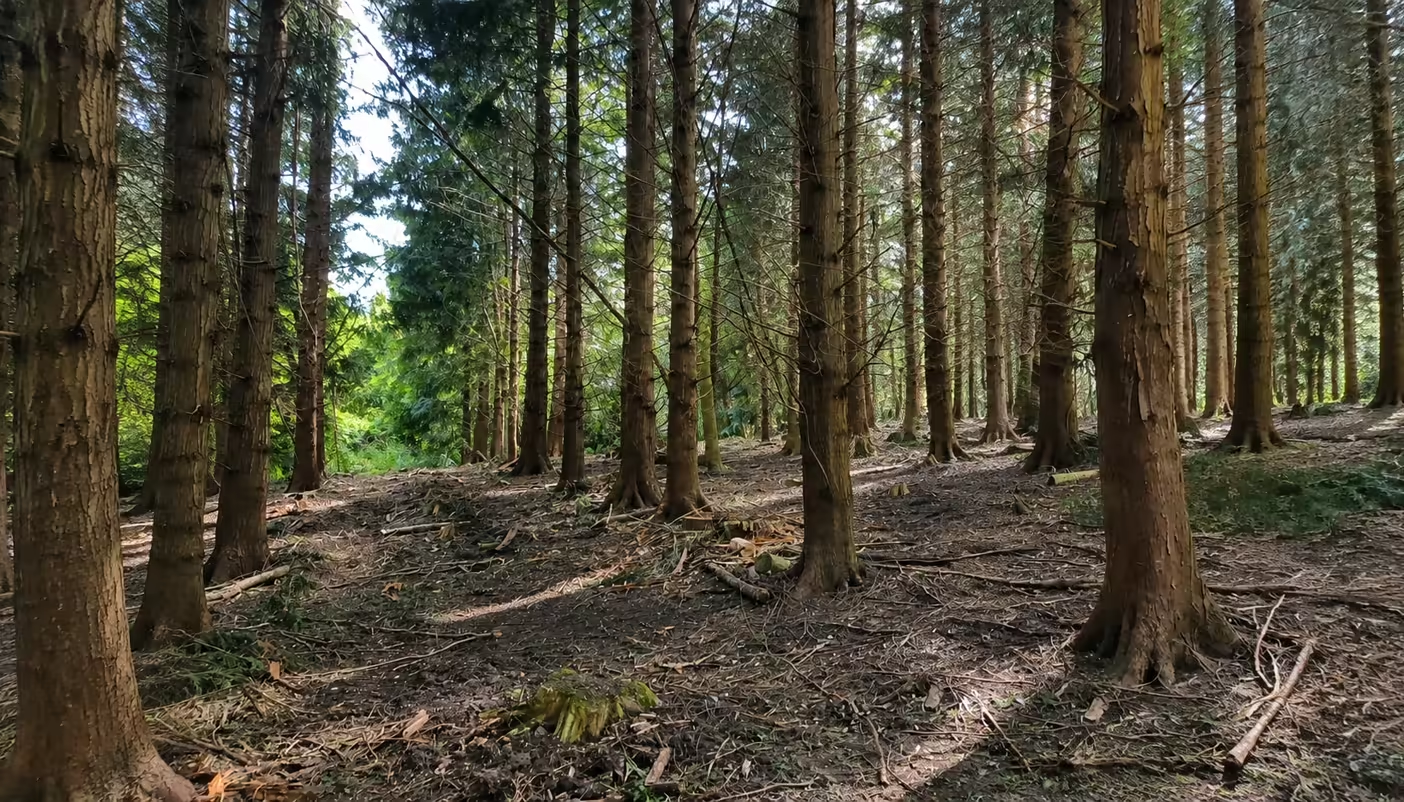
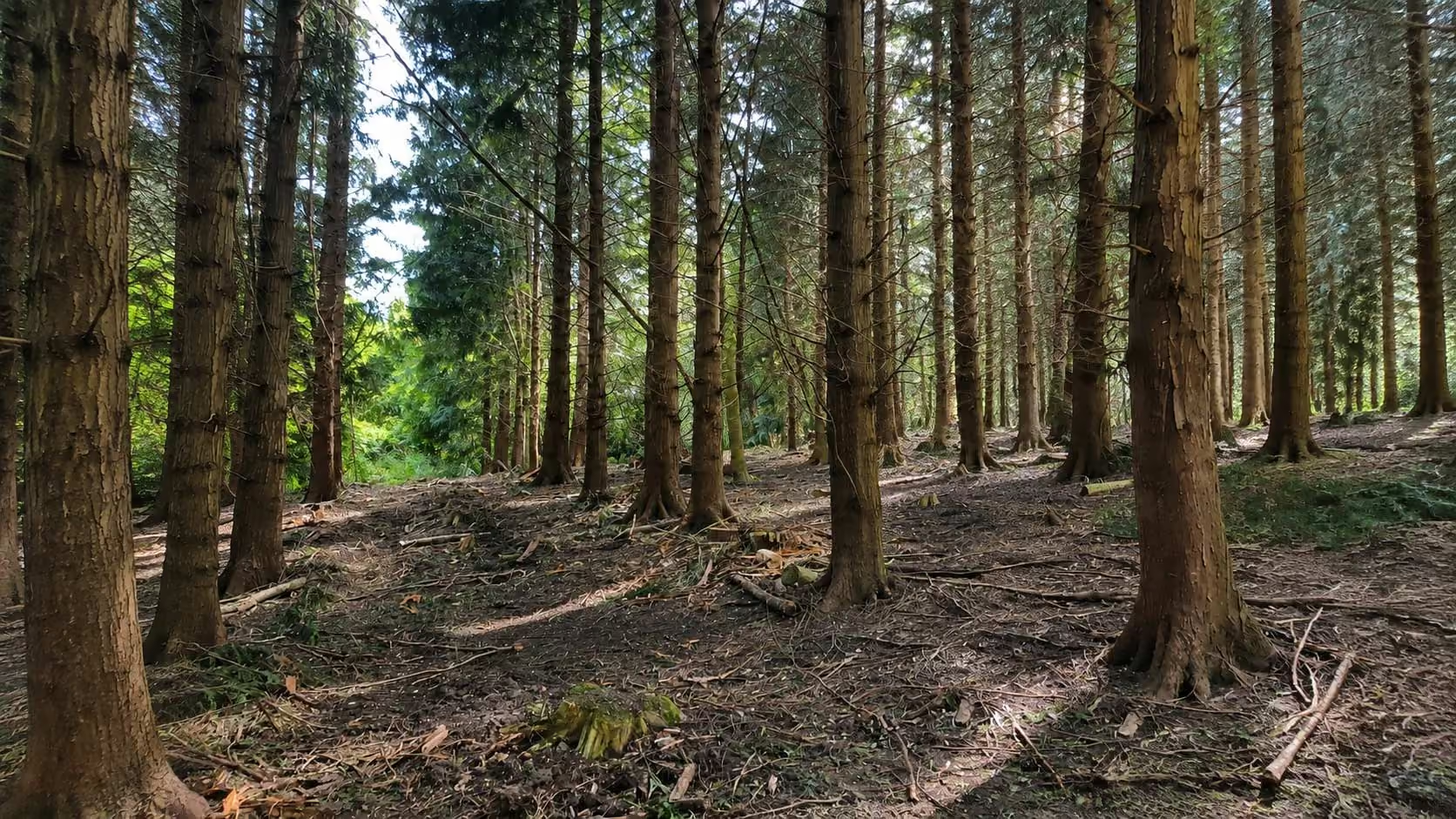
A neglected woodland can look wonderfully natural from the gate. Walk another hundred metres and the picture may be less romantic: overcrowded trees, windblow across an extraction route, failed restocking, deer damage, unsafe boundaries and a stand that should have been thinned years ago.
Nature has many talents, but keeping your forestry paperwork in order is not one of them.
The sensible question is therefore not simply, ‘Do I need a management plan?’ It is: ‘What do I want this woodland to achieve, what condition is it in now, and what work needs to happen in the right order?’
What is a woodland management plan?
A woodland management plan records the woodland's current condition, the owner's objectives and the operations proposed over a defined period. It turns broad ambitions - such as improving biodiversity, producing timber, managing public access or protecting landscape value - into a practical programme of work.
In England, the Forestry Commission's management-plan process is designed to help owners plan and communicate objectives, demonstrate sustainable management, support relevant grant applications and plan felling operations. An approved plan can also support felling permission for operations included in its plan of operations, potentially covering up to ten years. The precise position depends on the proposals and approvals, so it should be checked for the individual woodland.
A useful plan normally considers:
- the owner's objectives and priorities;
- woodland type, species, age structure and condition;
- constraints such as designated sites, protected species, archaeology, water and public access;
- tree health, pests, deer pressure, wind risk and climate resilience;
- thinning, felling, coppicing, restocking and maintenance proposals;
- access for people, machinery and timber extraction;
- a realistic programme, monitoring method and review points.
A plan, a good sort-out, or both?
Most woodland owners do not face a tidy either-or decision. The best answer is often both: deal with immediate risks and access problems, then put the remaining work into a coherent programme.
You probably need a management plan if...
- you own several compartments, age classes or woodland blocks;
- you expect to thin, fell, restock or improve access over several years;
- you want to apply for woodland-management funding that requires an approved plan;
- you need to coordinate timber, biodiversity, sporting, amenity or public-access objectives;
- the woodland has significant constraints or competing priorities;
- different contractors have been doing isolated jobs without a shared long-term programme;
- you want a defensible record of why operations are proposed and how they will be monitored.
You may need immediate practical work first if...
- unsafe trees threaten roads, buildings, boundaries or frequently used routes;
- windblow or failed infrastructure prevents safe access;
- a pest, disease or tree-health issue needs prompt assessment;
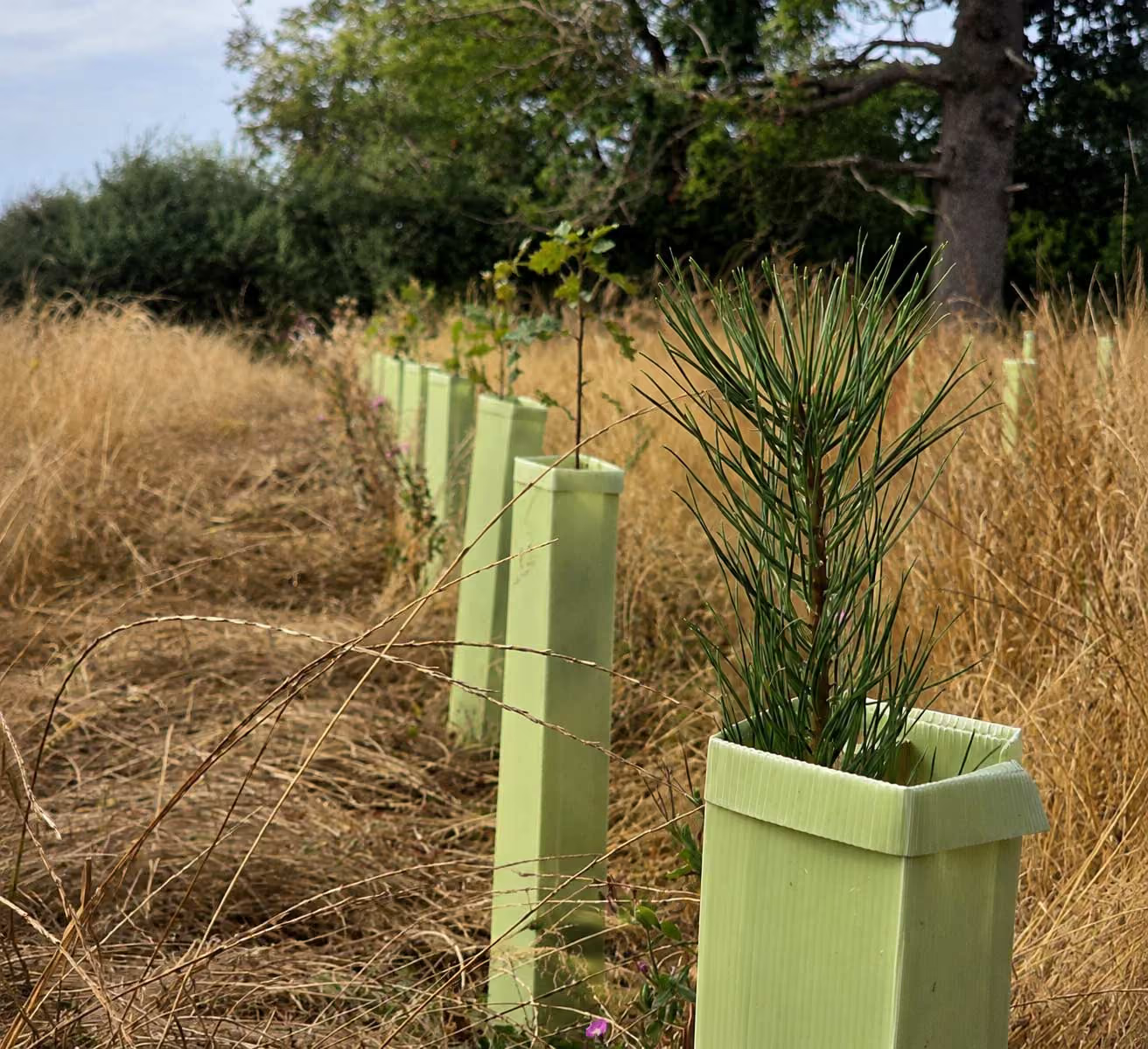
- young trees are being lost to competing vegetation, browsing or failed protection;
- drainage, culverts, gates or tracks are deteriorating and delay will increase the repair bill.
Urgent work still needs the correct risk assessment, permissions and ecological checks. ‘We were only tidying up’ is not a particularly robust compliance strategy.
What can a good management plan achieve?
1. It gives the woodland a clear purpose
Woodlands are commonly expected to do several jobs at once. They may provide timber, shelter, habitat, recreation, landscape value and an income contribution. A plan forces the owner to decide which objectives are primary, where they apply and how conflicts will be handled.
That matters because the right operation depends on the objective. A thinning prescription intended to improve the quality of a timber crop is not automatically the same intervention that would be chosen for structural diversity, public safety or habitat management.
2. It puts work in the correct order
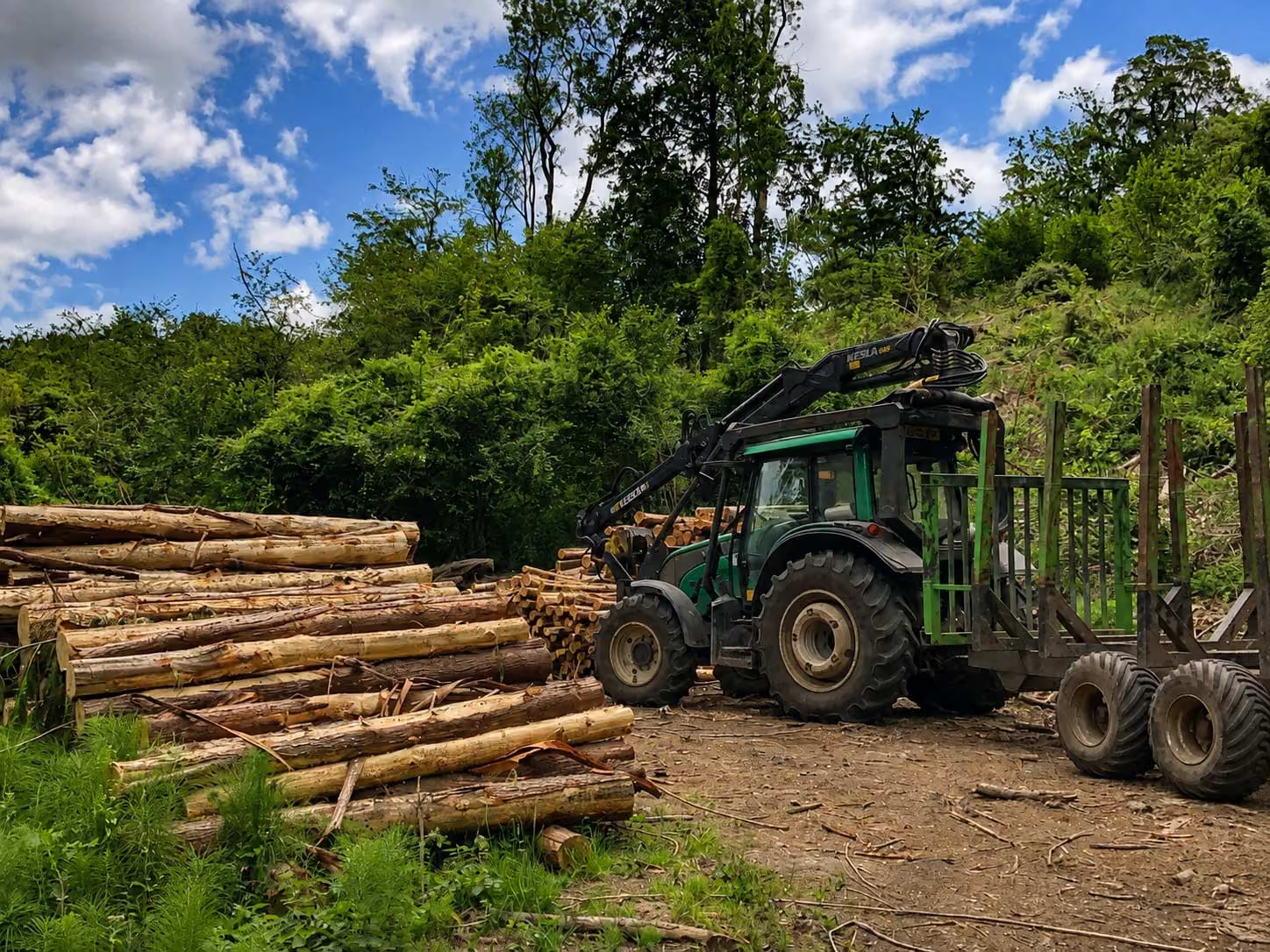
Forestry operations are connected. There is little value marking a thinning if the forwarder cannot reach the stand, and limited sense improving a track before confirming the expected machinery and timber movements. A plan links survey, permissions, access, operations, markets, restocking and maintenance so that one job does not obstruct the next.
3. It helps control cost and recover value
Not every woodland will generate a profit, and not every intervention should be judged on timber income alone. Even so, planned work is generally easier to package, price and supervise than a succession of emergencies. Timber value, contractor mobilisation, access costs, grant eligibility and future maintenance can be considered together.
The commercial test is not simply, ‘Will the timber pay for everything?’ It is also, ‘What will delay cost, what liabilities are developing, and which work can sensibly be combined?’
4. It supports permissions and funding
Tree felling in England may require a Forestry Commission felling licence unless an exemption applies. A management plan does not mean that every proposed operation is automatically authorised, and other consents may still be required. However, the Forestry Commission process allows felling proposals to be considered through the plan of operations, which can provide a much clearer route for programmed work.
Some funding routes also require an approved woodland management plan. Schemes and eligibility rules change, so funding should be checked against the current guidance before work starts or costs are committed. Starting first and asking about grant eligibility afterwards is an efficient way to discover that timing matters.
5. It creates continuity
A woodland may outlast several owners, agents and contractors. A written plan preserves the reasoning behind decisions and gives everyone a common reference point. It also makes annual reviews more useful: completed operations can be recorded, assumptions updated and delays dealt with before the programme becomes fiction.
What a management plan does not do
A plan is valuable, but it is not forestry by itself.
It does not fell a tree, repair a culvert, sell timber, control deer or keep a young crop free from competing vegetation. Nor should it be treated as a document written once and ignored until somebody notices the review date passed three years ago.
A credible plan must be:
- based on an up-to-date inspection and reliable mapping;
- specific enough to guide work and contractor procurement;
- realistic about access, budgets, markets and seasonal constraints;
- reviewed when conditions, ownership objectives or regulations change;
- connected to an annual programme of inspections and operations.
How to decide what your woodland needs
A professional initial assessment should establish five things before a detailed programme is commissioned:
- Objectives: what must the woodland deliver for the owner?
- Condition: what species, age classes, constraints and health issues are present?
- Priorities: what is urgent, what is valuable and what can wait?
- Permissions and funding: which approvals, consultations or grant conditions may affect the work?
- Delivery: can contractors and machinery reach the site, can timber be extracted, and how will future work be supervised?
The outcome may be a formal Forestry Commission management plan, a shorter operational schedule, an urgent safety or access package, or a combination of these. The correct scope depends on the woodland; producing the largest possible document is not an objective in its own right.
Frequently asked questions
Is a woodland management plan legally required?
Not for every woodland in every circumstance. However, particular operations may require permission, and an approved plan may be required for certain funding applications. Obtain site-specific advice before felling or committing to funded work.
Does a management plan include a felling licence?
The Forestry Commission's plan of operations can be used to plan and seek approval for felling over a period of up to ten years. Approval is not automatic, and proposals must meet the relevant requirements. Check the current Forestry Commission process for the site and operation.
How often should the plan be reviewed?
Review progress at least annually as part of operational planning, and revisit the plan when there is a material change: storm damage, disease, new ownership objectives, market changes, a failed crop or revised regulation. Formal plan periods and approval requirements should follow current Forestry Commission guidance.
Can a small woodland justify a plan?
Yes, where the risks, objectives or proposed work justify it. Smaller woods can still contain valuable timber, sensitive habitats, difficult access and significant liabilities. The level of detail should remain proportionate to the site.
Can the woodland pay for its management?
Sometimes, but not always. Timber income may offset thinning, access or restocking costs, while grants may support eligible work. The result depends on volume, quality, markets, access, terrain, contractor mobilisation and the owner's objectives. It should be assessed rather than assumed.
The practical next step
If you are unsure whether your woodland needs a formal plan, an operational programme or immediate remedial work, start with a site assessment. That allows the condition, constraints, access and commercial opportunities to be considered together before money is spent in the wrong order.
Tomorrow's Forests provides forestry and woodland management services across England, from initial assessments and management planning through to grant support, thinning, harvesting, restocking and ongoing maintenance. Contact us to discuss your woodland, the work already completed and what you want it to achieve over the next ten years.