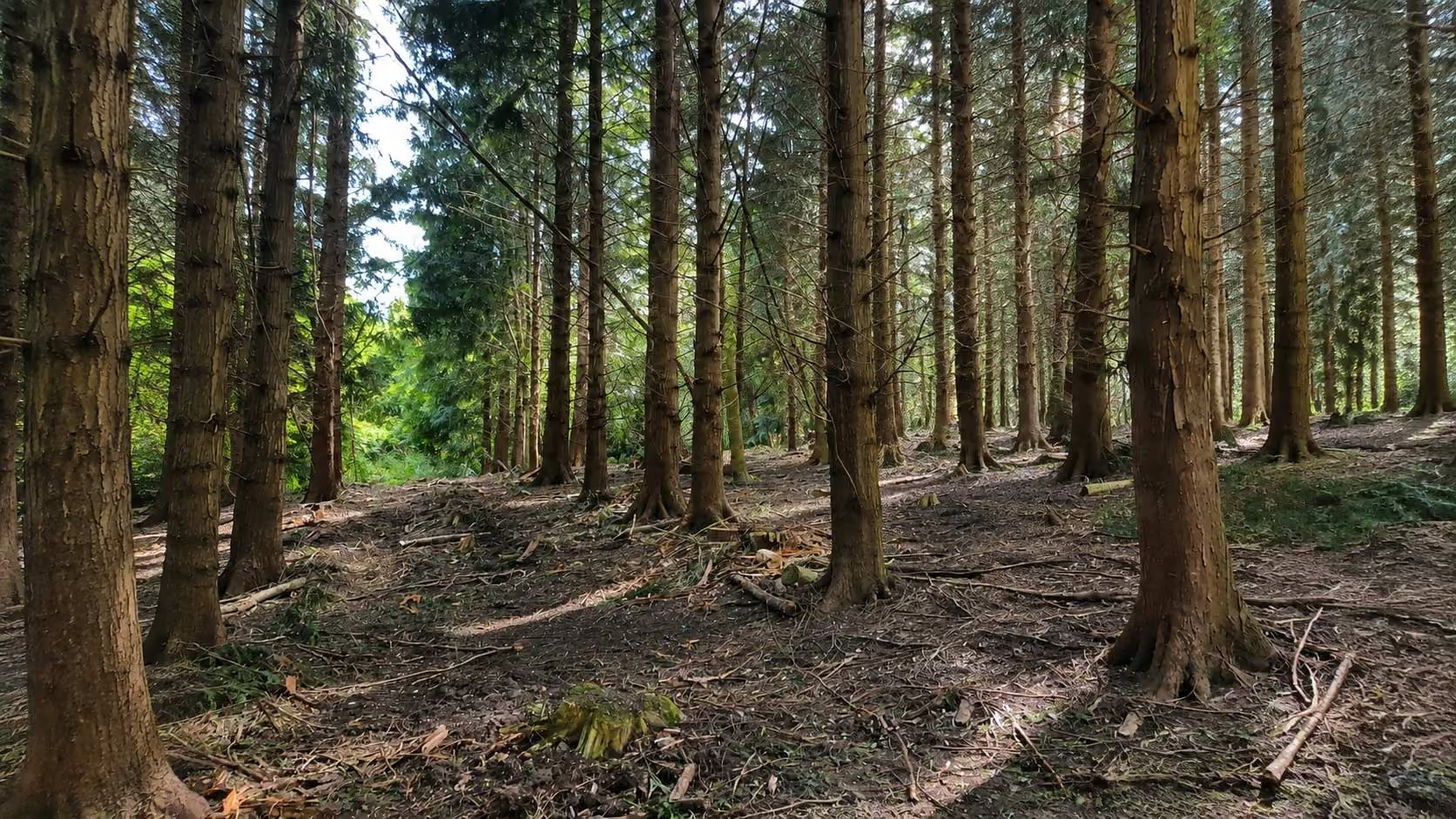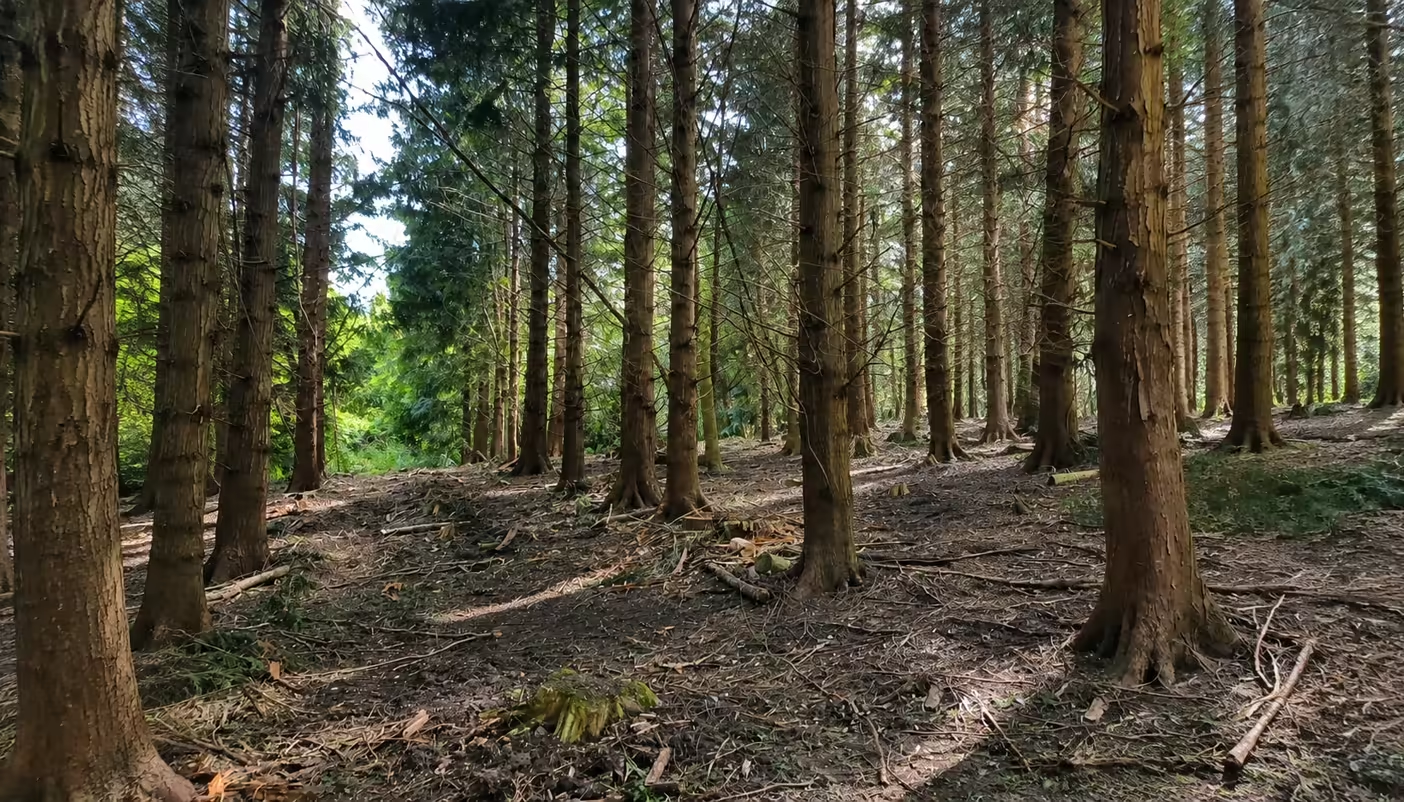


A woodland does not have to look abandoned to be neglected. It may still be green, full of birdsong and perfectly capable of impressing anyone viewing it from the gateway. The problems often become visible only when you walk the compartments, examine the crop, check the regeneration and ask how timber or machinery would actually reach the public road.
Woodland does not become low-maintenance simply because nobody has visited it for ten years. It usually becomes high-maintenance with better camouflage.
Equally, an untidy woodland is not necessarily a neglected one. Fallen timber, standing deadwood, scrub, veteran trees and open glades can all be valuable habitat. Good woodland management is not an attempt to make the site look like a municipal park. The real test is whether the woodland is healthy, safe enough for its use, renewing itself and delivering the owner's objectives.
If several of the following signs are present, the woodland probably needs a professional assessment and a prioritised programme of work rather than another year of optimistic non-intervention.
1. The canopy is dense and the woodland has little structure
A closed canopy is not automatically wrong. Some woodland types and management objectives depend on shade. The warning sign is uniformity: tightly spaced trees of a similar age, limited shrub layer, very little light reaching the ground and few younger trees waiting to form the next generation.
Where thinning has been repeatedly postponed, competition increases and individual crowns may become small. Timber quality, stability and future management options can suffer. In other woods, selective intervention may be needed to create a more varied structure, release promising trees or allow light to reach rides, glades and regeneration areas.
The appropriate response could be thinning, coppicing, selective felling or simply monitoring. It depends on species, soils, exposure, previous management and the owner's objectives. The prescription should follow an assessment; “let more light in” is an intention, not yet a specification.
2. Young trees are absent - or repeatedly failing
Look beneath the mature canopy. Are seedlings, saplings and younger age classes present? If not, the woodland may lack the next generation needed to replace mature trees. Where regeneration is present but every shoot finishes at roughly deer-head height, browsing pressure is likely influencing the outcome.
Failure may also result from heavy shade, competing vegetation, unsuitable species, poor planting, vole or rabbit damage, failed shelters, drought or repeated browsing by deer. Each cause requires a different response. Planting more trees without identifying why the previous ones failed is an expensive way to repeat the experiment.
A useful assessment records regeneration by species and size, checks browsing and protection, and decides whether natural regeneration, enrichment planting, restocking or mammal control offers the most practical route forward.
3. Access exists on the map but not on the ground
A faded track, collapsed culvert or gateway that admits a pickup but not forestry machinery can turn a manageable operation into an expensive one. Access problems also affect inspections, emergency response, timber haulage and routine maintenance.
Warning signs include blocked rides, water running down extraction routes, soft entrances, inadequate turning space, overgrown boundaries and bridges or culverts with unknown capacity. These defects rarely become cheaper through neglect.
Access should be reviewed before timber is marked or contractors are mobilised. The size and value of the operation must justify any infrastructure work, and soil, water, archaeology, public access and planning constraints may all affect the design.
4. Windblow, damaged trees and overdue operations are accumulating
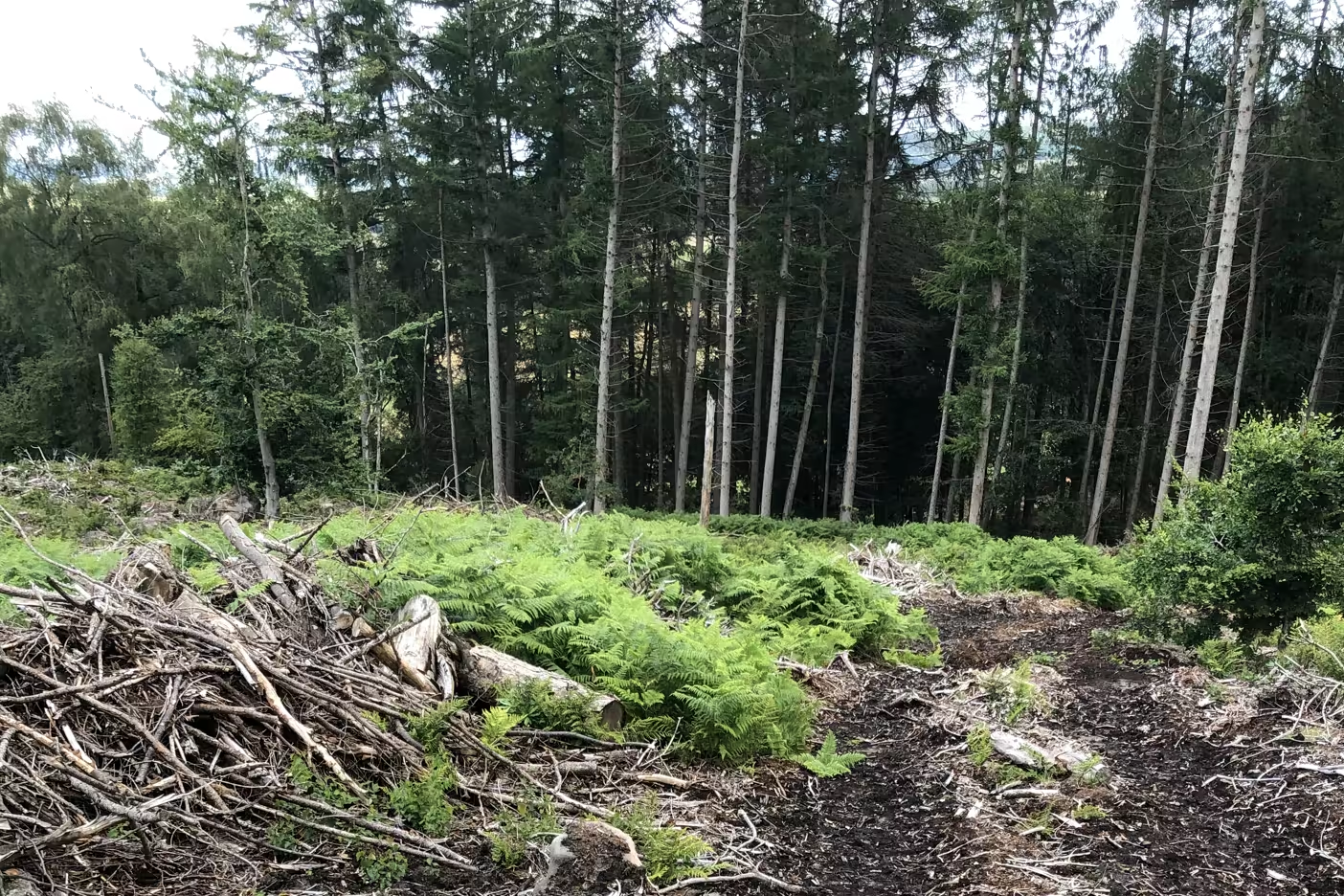
One fallen tree is part of woodland life. Repeated windblow across tracks, unstable edges, damaged stems and large areas of suppressed crop may indicate a developing management problem. Similarly, a first thinning delayed for too long can reduce future options and make extraction more difficult.
Not every dead or damaged tree should be removed. Deadwood is an important woodland habitat, and intervention can cause unnecessary ecological damage if approached as a general tidying exercise. Priorities should instead reflect risk, access, crop condition, habitat value and the likelihood that delay will increase loss or cost.
Trees beside roads, buildings, public routes or work areas require particular attention proportionate to how those areas are used. A professional inspection can separate immediate safety work from material that can safely remain as habitat.
5. Pests, disease or invasive plants are changing the woodland
Declining crowns, bark damage, repeated stem defects, unexplained mortality or an expanding understorey dominated by one invasive species should not be ignored. Deer and grey squirrels can prevent regeneration or damage valuable trees; invasive shrubs can suppress native ground flora and younger trees; pests and diseases may alter both safety and long-term species choice.
The important point is accurate identification. Similar symptoms can have different causes, and drastic action based on a hurried diagnosis may remove healthy trees or spread contaminated material. Record the location and extent, photograph symptoms and obtain specialist advice where necessary. Suspected notifiable pests and diseases should be reported through the appropriate plant-health route.
6. Useful timber is becoming a liability rather than an asset
Woodland owners sometimes assume that standing timber can simply wait until prices improve. Trees continue growing, but markets, access, quality, stability and harvesting costs also change. Small, scattered or deteriorating parcels can become progressively less attractive to work.
A woodland should not be managed for timber value alone, but neither should potential income be ignored. Timely thinning or harvesting may contribute towards access, restocking, habitat work or future maintenance. The correct decision depends on measurable volume and quality, harvesting constraints, likely products, current markets and the cost of getting timber to roadside.
An indicative value based on a quick look from the gate is not a timber marketing strategy. Proper measurement, specification, contractor planning and sale arrangements are needed before income can be relied upon.
7. Nobody can explain what happened last - or what happens next
The clearest sign of neglect is often administrative rather than botanical. There may be no current map, no compartment records, no management objective, no schedule of inspections and no reliable history of felling, planting, grants or permissions.
Without that continuity, work becomes reactive. Different contractors solve isolated problems, opportunities for funding or timber income are missed, and important constraints are rediscovered every time somebody new visits the site.
A proportionate woodland management plan creates a common reference point. It should record present condition, objectives, constraints, proposed operations, monitoring and review dates. It does not need to make the woodland bureaucratic; it needs to prevent the same decisions being made repeatedly from scratch.
What should happen first?
Do not begin with a shopping list of operations. Begin with an assessment. The first visit should establish:
- Objectives: what does the owner need the woodland to deliver?
- Condition: what species, age classes, health issues and constraints are present?
- Urgency: what creates an immediate safety, access, ecological or financial risk?
- Opportunity: where could thinning, timber, grants or combined operations help fund the work?
- Delivery: what permissions, surveys, access improvements, contractors and monitoring will be required?
The resulting programme may combine immediate safety work, access repairs, pest or invasive-species control, thinning, restocking and longer-term monitoring. Not everything has to happen in the first winter. The purpose of planning is to put work in the right order and stop urgent items being hidden among desirable ones.
Can neglected woodland be brought back into management?
Usually, yes - but recovery should be proportionate and phased. Sudden heavy intervention can expose retained trees to wind, damage soils, disturb protected features or create a restocking and maintenance burden that the owner has not budgeted for.
A better approach is commonly to stabilise immediate risks, confirm objectives and constraints, restore practical access where justified, then deliver operations through a monitored programme. The woodland has taken years to reach its current condition; it does not necessarily need to be “fixed” in one dramatic season.
Frequently asked questions
Does an unmanaged woodland always need thinning?
No. The correct intervention depends on woodland type, condition and objectives. Some areas may benefit from thinning or coppicing; others may be retained with limited intervention for habitat, landscape or long-term structural reasons. Assessment should precede prescription.
Should fallen and dead trees be removed?
Not automatically. Deadwood has substantial ecological value. Removal should focus on justified safety, access, pest, disease or operational needs, while retaining suitable standing and fallen deadwood where it can safely remain.
Can timber income pay for bringing a woodland back into management?
Sometimes it can contribute significantly; sometimes harvesting costs, access or low-value material mean it cannot. Reliable forecasting requires an assessment of volume, quality, products, markets, access and contractor costs. Avoid committing to other expenditure against unverified timber value.
Will a woodland management plan cover every permission?
No. A plan helps organise proposals and demonstrate sustainable management, but separate felling approval, protected-site consent, ecological checks, planning permission or other authorisation may still be required. Requirements must be checked for the individual site and operation.
A practical first step
If your woodland shows several of these signs, the first useful action is an initial professional inspection - not an immediate commitment to a major harvesting programme. A forester should identify urgent issues, management opportunities, likely constraints and whether a formal woodland management plan is justified.
Tomorrow's Forests provides forestry and woodland management services throughout England, supported by regional foresters and experienced operational teams. We can take a project from initial inspection and mapping through management planning, grant and licence support, contractor procurement, thinning, harvesting, timber sales, restocking and long-term maintenance.
Contact us to arrange an initial discussion about your woodland, its access and the outcomes you want it to deliver.