

Short answer: if you intend to fell growing trees in England, you will normally need a Forestry Commission felling licence unless a specific exemption applies. The answer depends on the trees, their size and location, the volume being felled, the type of operation and any other permissions affecting the site.
Owning the woodland does not automatically give you an unrestricted right to fell its trees. The trees may be yours; the regulatory decision is not always entirely yours.
That can feel surprising to owners who are planning what appears to be routine work: a thinning, the removal of diseased trees, clearing windblow or harvesting a mature crop. But tree felling is legally controlled in England, and the question needs to be resolved before a contractor starts work.
A chainsaw is exceptionally efficient at turning a question about permission into an enforcement problem.
The quick guide
You are likely to need a felling licence if:
- you are thinning or harvesting established woodland;
- the trees exceed the relevant diameter limits;
- the total volume will exceed 5 cubic metres in a calendar quarter;
- more than 2 cubic metres from that allowance will be sold; or
- no specific exemption clearly applies.
You may not need one for genuinely small-diameter trees, limited volumes within the quarterly allowance, certain locations or narrowly defined situations such as fully grounded windblow. However, exemptions need to be evidenced and other controls may still apply.
If there is any doubt, resolve it with the Forestry Commission or a competent forester before felling begins.
What is a felling licence?
A felling licence is the Forestry Commission's legal permission to fell specified growing trees. Applications are free in England. The licence identifies what may be felled and may include conditions requiring the woodland to be restocked and the replacement trees maintained.
It also provides evidence that timber entering the market has been legally felled. Felling proposals are assessed against the UK Forestry Standard, which sets the government's approach to sustainable forestry.
A licence is permission for the felling described in the application. It is not a general approval for every part of the operation. Protected species, designated sites, Tree Preservation Orders, conservation areas and land-use change may create additional requirements.
When is a felling licence normally required?
The starting position is straightforward: a licence is normally required to fell growing trees on land in England unless an exemption applies. This includes individual trees as well as groups and woodland compartments.
For a commercial thinning, selective felling, coppice operation or clearfell, it is sensible to assume that a licence may be required until the proposal has been measured and checked properly.
The Forestry Commission does recognise several exemptions. They are useful, but they are not interchangeable, and the person relying on an exemption is responsible for being able to prove that it applies.
The five-cubic-metre allowance
In any calendar quarter, an owner may fell up to 5 cubic metres of growing trees on their property without a felling licence, provided no more than 2 cubic metres are sold.
The calendar quarters are:
- 1 January to 31 March;
- 1 April to 30 June;
- 1 July to 30 September; and
- 1 October to 31 December.
This is a volume allowance, not a number-of-trees allowance. Five large trees may exceed it comfortably, while a greater number of small stems may not. The standing volume must be estimated using the appropriate measurement method, including relevant parts of large broadleaved trees.
The Forestry Commission measures timber in cubic metres, not in reassuring phrases such as "only a few trees".
Repeatedly using the allowance to clear woodland over successive quarters may still create problems under the forestry Environmental Impact Assessment rules. Owners using the allowance should retain dated records, maps, measurements and photographs showing what was felled and when.
Small-diameter trees
A felling licence is not normally required for trees measuring no more than 8cm in diameter over bark at 1.3 metres above ground level.
Different limits apply to particular operations:
- for thinning, trees measuring no more than 10cm in diameter over bark at 1.3 metres;
- for underwood or existing coppice, individual stems measuring no more than 15cm at the same height.
The operation must genuinely meet the relevant definition. Describing extensive removal as "thinning" does not make it thinning. Forestry Commission guidance interprets thinning as removing no more than 30% of the trees from an area, distributed evenly among the retained trees, to improve the growth of those that remain.
Trees in particular locations
There are exemptions for certain fruit trees and for trees growing in orchards, gardens, churchyards or public open spaces. Trees growing in the inner London boroughs are also treated differently under the legislation.
An exemption from a Forestry Commission felling licence does not necessarily remove local planning controls. A protected garden tree, for example, may still require consent under a Tree Preservation Order or conservation-area procedure.
Dangerous trees
An exemption may apply where felling is necessary to prevent danger, but the test is narrower than many owners expect. Forestry Commission guidance describes an immediate risk of serious harm requiring urgent work. A tree is not automatically dangerous because it is old, leaning, damaged or diseased.
Unless the danger is clear and obvious, an arboricultural assessment may be needed. Keep photographs, inspection records and professional reports. The burden of proving that the exemption applied rests with the person relying on it.
Diseased, dying and dead trees
Disease is not a general exemption. Growing trees that are diseased or dying will normally still require a felling licence unless another exemption applies. This is particularly relevant to ash dieback: diseased ash generally requires a licence unless the tree is dead or presents a real and immediate danger.
A Statutory Plant Health Notice may authorise or require work to control a quarantine pest or disease. The notice has its own requirements, including possible controls on moving timber.
Genuinely dead trees are not growing trees, but their condition should be recorded and other protections still considered. Deadwood can also have significant habitat value, so absence of a felling-licence requirement is not, by itself, a reason for removal.
Windblown trees
Trees that are fully windblown and entirely on the ground can be removed without a felling licence. A licence may still be needed for trees left standing at an angle or for additional felling to create a windfirm edge.
This distinction matters after storms, when a mixture of grounded, leaning and unstable standing trees may be present within the same area. It is also specialist, hazardous work: the licensing position does not make the timber safe to cut.
Development and statutory work
Some felling immediately required to implement full planning permission or permitted development may be exempt. The exemption does not automatically cover every tree inside a planning application's red-line boundary, and outline permission alone is not sufficient.
Separate provisions apply to statutory undertakers and work required under other legislation. These situations should be checked against the specific permission or statutory power rather than assumed.
A felling licence is not the only permission you may need
This is where apparently simple projects often become less simple.
A felling licence authorises the specified tree felling, but the wider operation must still comply with other legal and environmental requirements. Depending on the site, checks may include:
- Tree Preservation Orders and conservation areas;
- Sites of Special Scientific Interest and other designated sites;
- protected species and nesting birds;
- ancient woodland, priority habitats and veteran trees;
- Scheduled Monuments, archaeology and historic features;
- watercourses, soils and pollution controls;
- public rights of way, open-access land and common land;
- planning permission for access or infrastructure; and
- Environmental Impact Assessment requirements where woodland is being converted to another land use.
Trees protected by a Tree Preservation Order must be declared in a felling-licence application. Where a felling licence is required, the Forestry Commission normally consults the local planning authority. Work in a conservation area also needs the correct route followed.
Wildlife checks are operational requirements, not decorative paragraphs added to a method statement. The presence of protected species does not necessarily prevent woodland management, but it may affect the timing, method, surveys and licences required.
Will I have to replant after felling?
Usually, where the operation removes an area of woodland rather than thinning it.
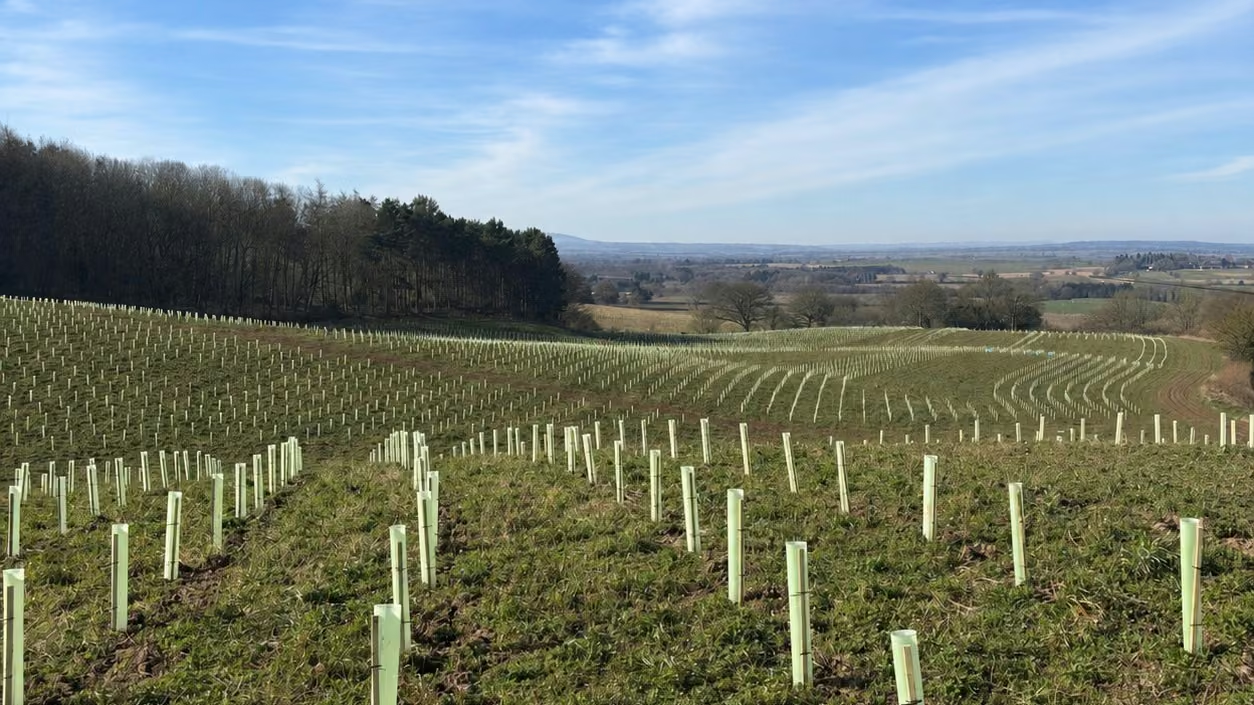
There is a general presumption against permanent loss of woodland cover. Most clearfelling and other non-thinning licences therefore include restocking conditions. Restocking may be achieved by replanting, natural regeneration or an agreed combination, depending on the site and objectives.
A thinning-only licence is normally unconditional because sufficient woodland cover remains, although the exact position depends on the application.
Restocking is not a ceremonial handful of saplings for the completion photograph. Licence conditions typically require the replacement trees to be established and actively maintained for ten years. That means the proposal must consider species choice, planting or regeneration, deer and livestock pressure, vegetation control, replacement of failures and ongoing monitoring.
These obligations matter when land is sold. Remaining felling permission and engaged restocking or maintenance conditions can pass to a new owner, so live licences should form part of woodland due diligence.
What information is needed for a felling-licence application?
A credible application begins with a credible proposal. The Forestry Commission will need enough information to understand what is present, what will be felled, why the work is proposed and what will happen afterwards.
The normal process includes:
- Confirm ownership and authority. The applicant must have a sufficient interest in the land, or be properly authorised to act for someone who does.
- Inspect and inventory the woodland. Record the species, numbers or areas, dimensions, condition and compartments affected. The level of detail should match the operation.
- Define the felling operation. State whether the proposal is thinning, selective felling, coppicing, regeneration felling, clearfelling or another recognised method.
- Check constraints. Review designations, protected features, tree health, landscape, water, access, adjoining land and other relevant datasets.
- Prepare restocking proposals. For operations other than thinning, explain how woodland cover will be restored or why a land-use change is proposed.
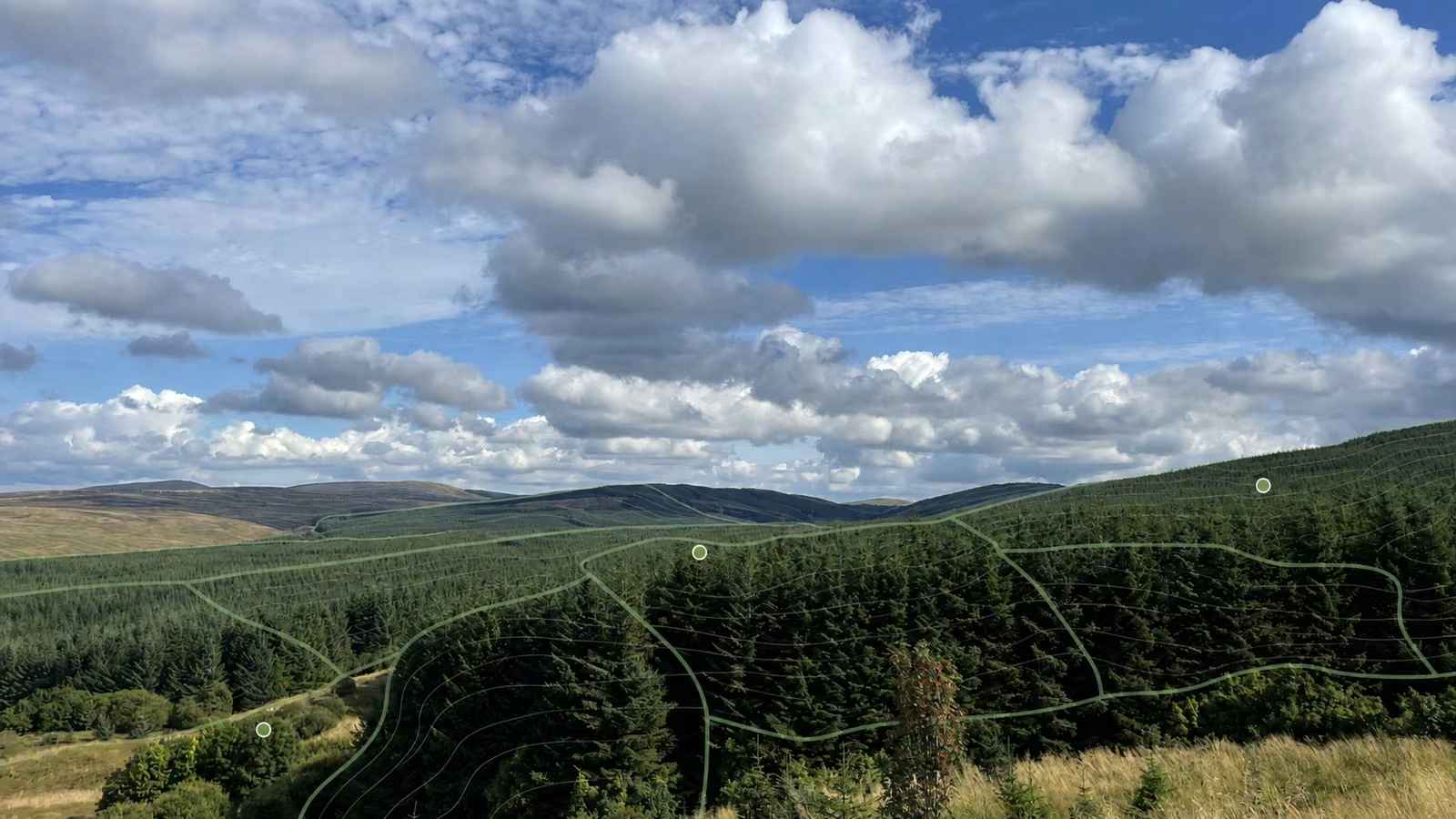
- Produce accurate maps. Identify the felling and restocking areas clearly and ensure the written schedules correspond with the mapped compartments.
Submit the application and supporting information. An agent must provide the Forestry Commission's evidence of authority to act.
An inaccurate map can give a very precise answer to the wrong question. It can also cause the application to be returned, at which point the three-month decision period starts again when the corrected application is resubmitted.
How long does a felling licence take?
The Forestry Commission aims to decide a complete application within three months. Consultations, missing information, incorrect mapping or complex constraints can extend the process.
Unless the application is for thinning only, information from the application will normally be published on the Public Register so that comments can be considered. The Forestry Commission may also consult statutory bodies or other organisations about environmental and land-use matters.
Owners should apply at least three months before the intended start of felling and allow additional time where surveys, consultations or revised proposals may be required. Contractor availability, ground conditions, wildlife constraints, access works and timber markets then need to be programmed around the permission.
A standalone licence can be issued for up to five years. A licence associated with an approved woodland management plan can cover up to ten years of felling. Longer-term planning is particularly valuable where several compartments or phased operations are involved.
Felling licences cannot simply be extended or amended after issue. If the intended work changes, the position should be discussed with the Forestry Commission before departing from the approved proposals; a new application may be required. This is another reason to measure, map and programme the work properly at the beginning.
What should happen after the licence is issued?
The licence should be translated into an operational specification before machinery arrives. The owner, forester, timber buyer and contractor need a shared understanding of:
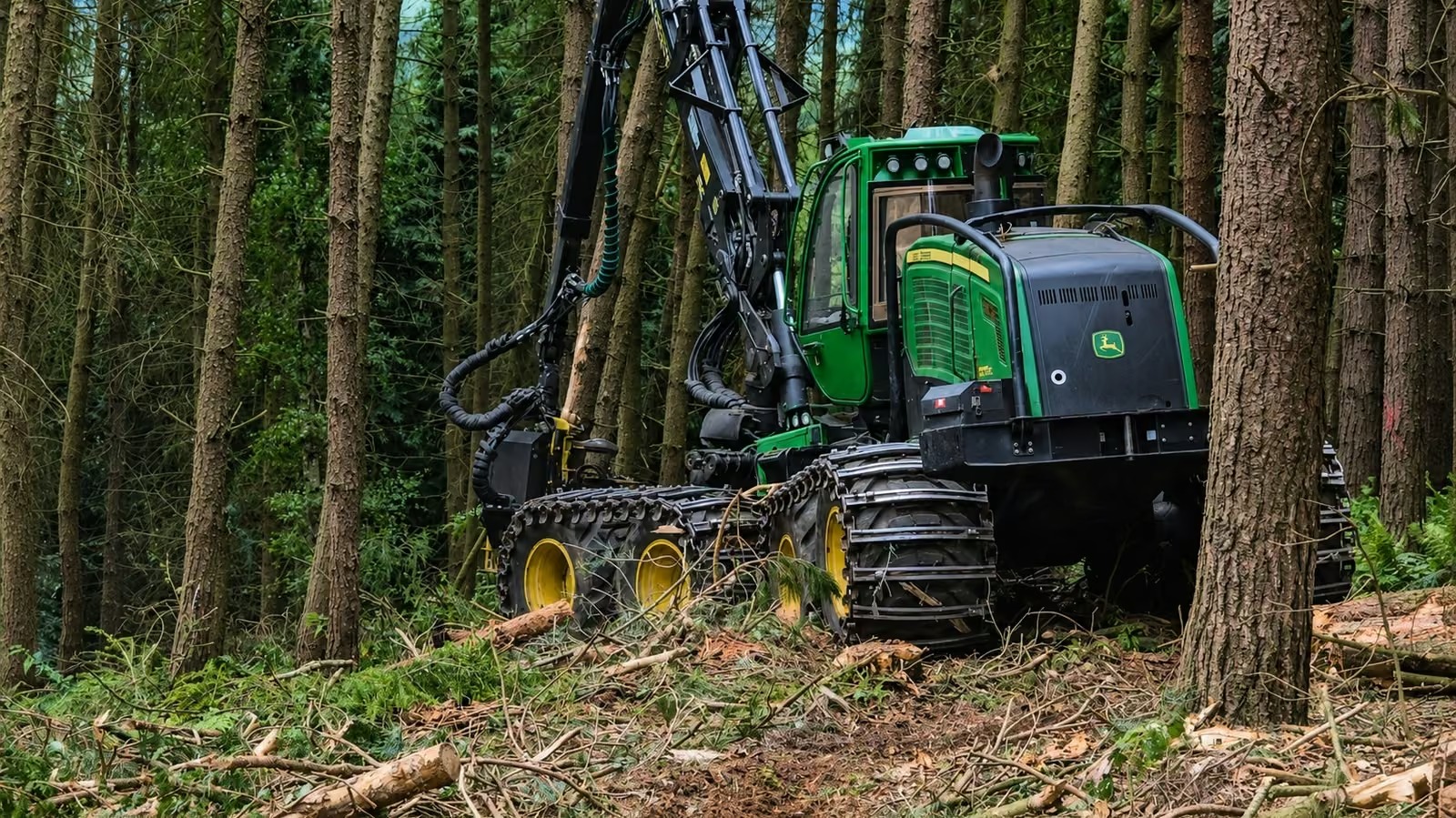
- the licensed boundary and trees or areas to be felled;
- retained trees, buffers and protected features;
- working methods and seasonal restrictions;
- access, extraction routes, stacking areas and haulage;
- pollution prevention and soil protection;
- ecological controls and stop-work procedures;
- timber measurement and sale arrangements;
- restocking conditions and delivery dates; and
- supervision, records and compliance responsibilities.
Do not assume that the contractor will reconstruct the licence from a map attached to an old email. The approved proposals should be available on site, reflected in the risk assessment and operational documents, and checked during the work. Felling should not begin until the licence and all other required permissions are in place.
What happens if trees are felled without a required licence?
Felling growing trees without a required licence is an offence. All parties involved may be investigated and prosecuted, not only the landowner.
The consequences can include:
- an unlimited fine;
- a restocking notice requiring trees to be replaced and maintained for up to ten years;
- an enforcement notice where restocking requirements are not met;
- a court restocking order, with further penalties for non-compliance; and
- restocking or enforcement notices recorded on the Local Land Charges Register.
The potential consequences can therefore exceed the commercial value of the felled timber, particularly once investigation, legal, restocking and reinstatement costs are included.
Frequently asked questions
Do I need a felling licence to thin my woodland?
Usually, if the trees exceed the relevant diameter and total-volume exemptions. Thinning is not automatically exempt. A thinning-only licence will normally avoid restocking conditions because woodland cover is retained.
Can my tree surgeon or forestry contractor decide whether a licence is needed?
They may provide useful professional advice, but everyone involved must ensure the correct permission or exemption is in place. For woodland-scale work, the proposal should be checked by a competent forester and, where uncertainty remains, discussed with the Forestry Commission before felling.
Does planning permission replace a felling licence?
Not automatically. Full planning permission may provide an exemption where tree removal is immediately required to carry out the authorised development. Outline permission, a red-line boundary or a future application is not enough by itself.
Does a felling licence allow work at any time of year?
The licence may permit felling during its stated period, but wildlife law, site conditions, biosecurity, grant requirements and licence conditions may affect when and how work can proceed. Seasonal programming should follow an operational assessment.
Can I apply for several years of work at once?
Yes. A standalone licence can last up to five years. Felling linked to an approved woodland management plan can be licensed for up to ten years, which can be more efficient for phased management across several compartments.
The practical next step
If you are considering thinning, selective felling, coppicing or harvesting, begin with a woodland assessment rather than an application form. The operation first needs to make silvicultural, environmental and commercial sense. The licence should describe a sound proposal; it cannot make a poor one sensible.
Tomorrow's Forests provides forestry and woodland management services throughout England. Our foresters can assess the woodland, prepare inventories and mapping, check constraints, develop felling and restocking proposals, manage the licence process and take approved operations through contractor procurement, harvesting, timber sales, restocking and ongoing maintenance.
Contact us to discuss the woodland, the work you are considering and the permissions likely to be required before anything is felled.