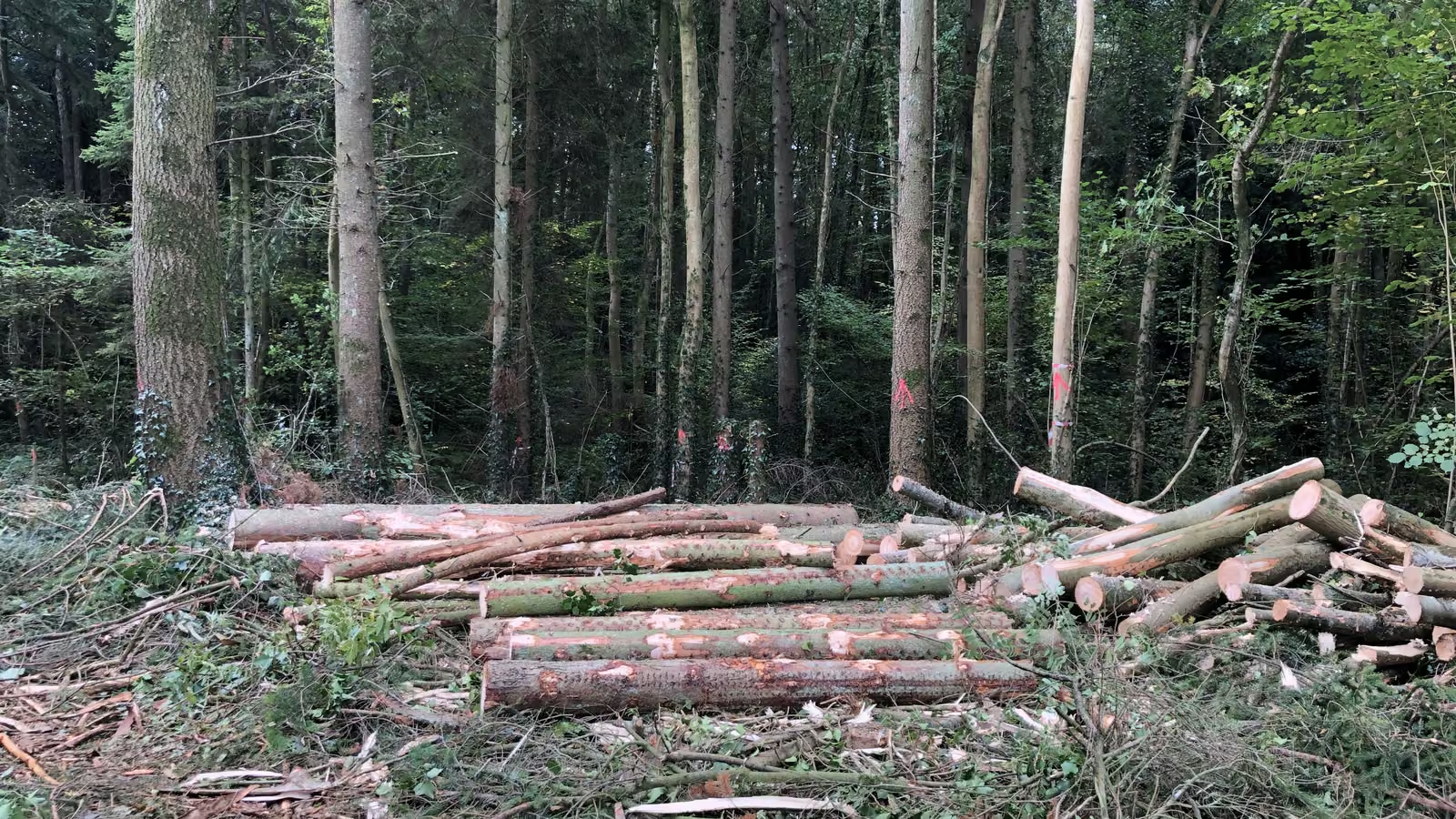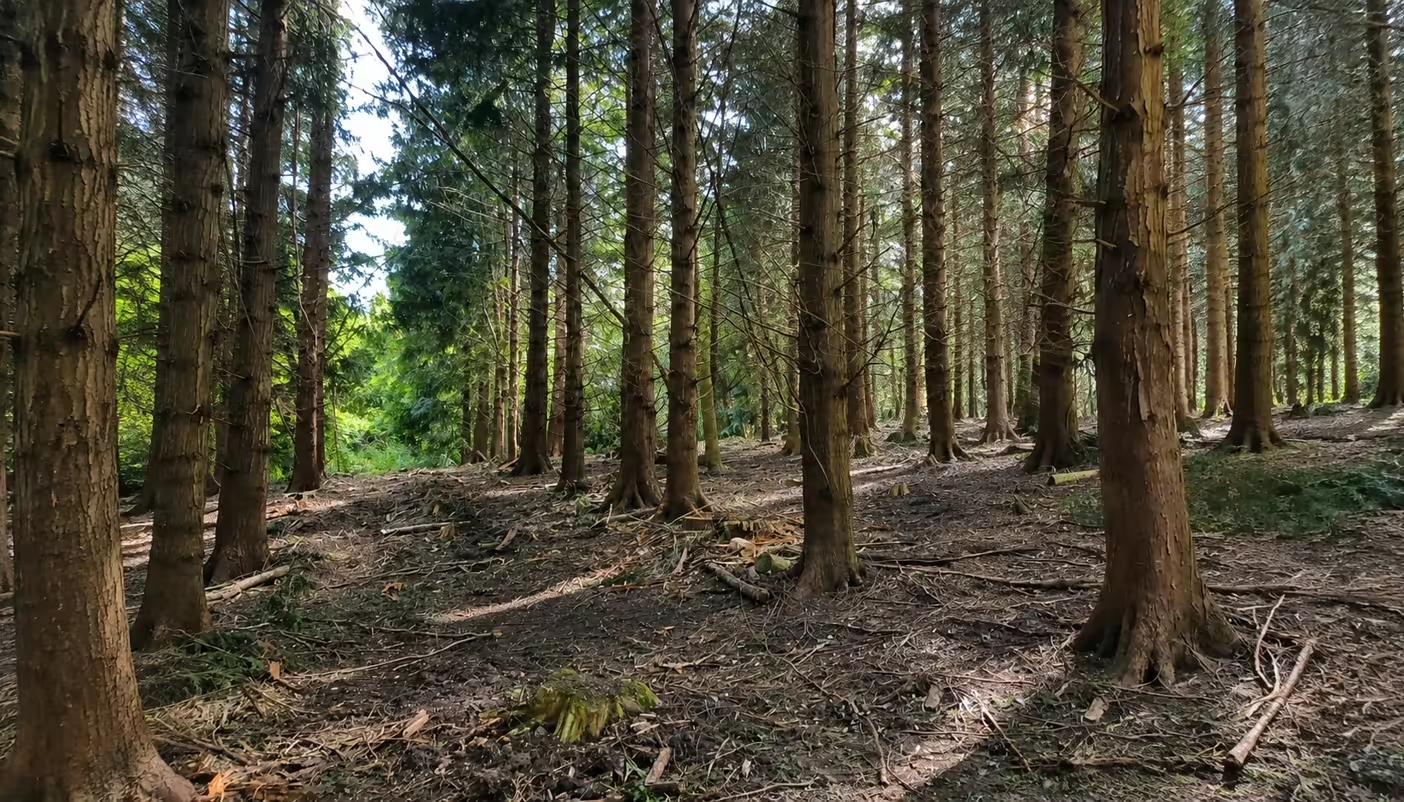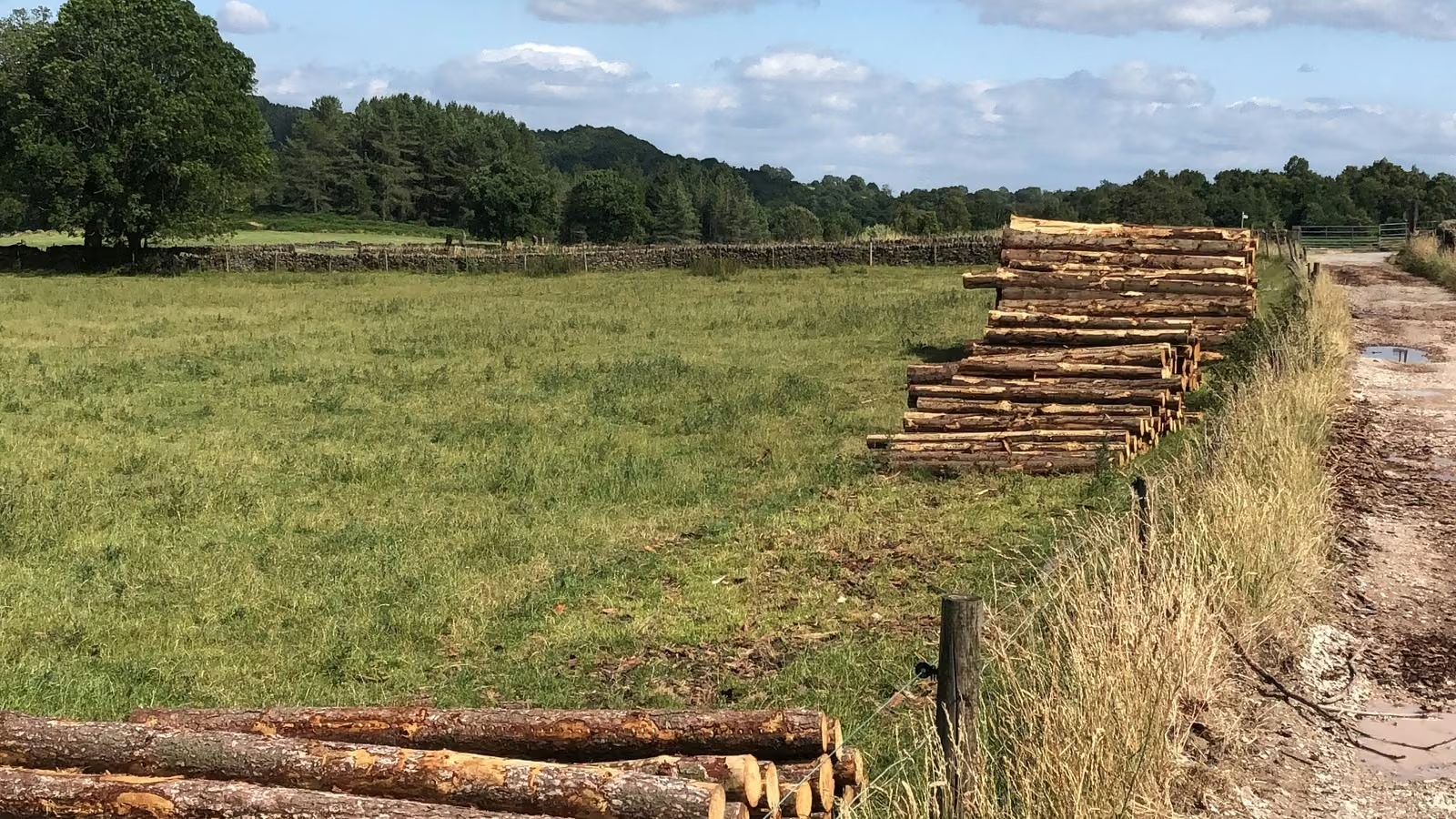


If you want to sell timber from your woodland, the process is not quite as simple as finding someone with a chainsaw and agreeing a price beside the gate.
A successful timber sale requires the woodland to be assessed, the trees measured, the right markets identified and the harvesting operation properly planned. Permissions, access, ground conditions, environmental constraints, contractor costs and restocking obligations can all affect whether the proposed work is commercially worthwhile.
The objective is not merely to sell some trees. It is to secure the best realistic return while leaving the woodland safe, compliant and capable of meeting its longer-term objectives.
The timber sale process at a glance
- Assess the woodland and confirm that felling is the right management intervention.
- Check ownership, permissions, environmental constraints and restocking requirements.
- Measure the crop and estimate its standing volume, quality and likely product mix.
- Choose between a standing sale and a roadside sale.
- Prepare sale particulars and invite comparable offers from suitable buyers.
- Agree a written contract covering payment, harvesting, access and reinstatement.
- Supervise the operation, reconcile timber movements and complete the required restoration or restocking.
Each stage affects the next. Marketing timber before the crop, permissions and access have been properly understood tends to produce confident promises followed by less confident explanations.
Can timber from a private woodland be sold?
Yes. Timber from privately owned woodland can be sold provided the owner has authority to sell it and the proposed felling is lawful. This article is written principally for woodland owners in England; licensing and regulatory arrangements differ elsewhere in the UK, although the UK Forestry Standard applies across all four countries.
Before marketing the timber, the owner or forestry agent should establish:
- who owns the trees and has authority to sell them;
- whether the work is thinning, selective felling, coppicing or clearfelling;
- whether a Forestry Commission felling licence is required;
- whether an approved woodland management plan covers the work;
- whether Tree Preservation Orders, conservation areas or designated sites apply;
- whether protected species, watercourses, archaeology or other constraints require additional precautions; and
- what restocking or regeneration will be required after felling.
A timber buyer can assess the commercial opportunity, but the woodland owner still needs to ensure that the operation is properly authorised. Ownership of the trees is important. Unfortunately, it is not a substitute for permission to fell them.
What determines the value of woodland timber?
There is no reliable universal price per tree, acre or tonne. Timber prices move, and two apparently similar woodlands can produce very different net returns.
The value of a parcel depends on the products that can be recovered and what it will cost to get those products safely from the standing tree to the customer.
Species
Different species supply different markets. Spruce, Douglas fir, larch, pine, oak, beech, sweet chestnut and mixed lower-grade hardwoods may all have commercial uses, but their buyers, specifications and values differ.
Tree size
Larger trees may produce higher-value sawlogs, but size alone does not guarantee value. Very large, heavily branched or defective trees may be harder to process and may produce less usable material than expected.
Stem quality
Straightness, branching, knots, sweep, decay, staining, cracks, metal contamination and other defects influence the products that can be cut from each stem.
A magnificent-looking oak beside the track may be valuable. It may also contain three old nails, a length of fencing wire and the remains of someone's treehouse ambitions.
Total volume
Harvesting machinery, haulage and site setup all have fixed costs. A larger, reasonably uniform parcel can therefore attract stronger interest than a small or scattered volume of timber.
Product mix
One crop may produce sawlogs, fencing material, pallet wood, small roundwood, chipwood, firewood, biomass or specialist hardwood logs. Value is usually improved by identifying and separating appropriate products rather than treating every stem as one undifferentiated pile of wood.
Access and extraction
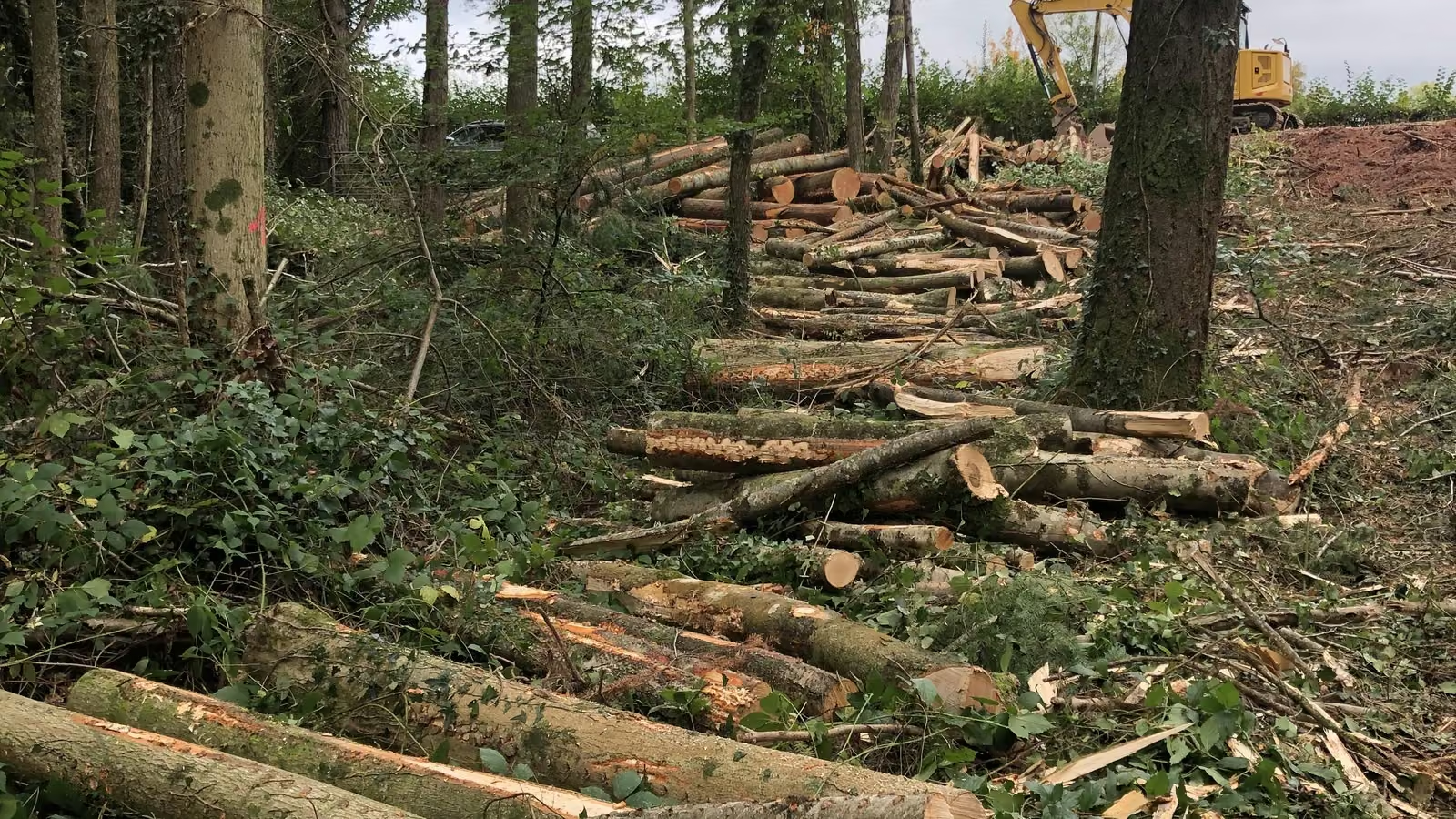
Poor entrances, weak bridges, narrow tracks, steep slopes, soft ground, limited stacking space and long extraction distances can significantly reduce standing value. Seasonal restrictions may also shorten the practical working window.
Good timber behind impossible access remains good timber. It is simply good timber with a transport problem.
Market conditions
Mill demand, construction activity, energy markets, imports, storms, disease-related harvesting and regional supply all influence prices. A credible valuation should use current market knowledge rather than a historic figure borrowed from another woodland.
How is the amount of timber estimated?
Before timber is offered for sale, the woodland should normally be inspected and measured. The assessment may record species, area, stem numbers, average diameter, height, stocking, estimated standing volume, stem quality, likely products, access and operational constraints.
The required level of measurement depends on the crop and proposed sale. A uniform conifer compartment may be assessed using sample plots and established mensuration methods. A selective hardwood sale may require individual trees to be marked and recorded.
Standing timber volume is generally expressed in cubic metres overbark standing. It is not identical to final saleable volume: stumps, tops, branches, defects and processing losses affect recovery. An inventory is therefore an informed estimate, not a promise that every measured cubic metre will arrive at the mill.
Should timber be sold standing or at roadside?
Standing timber sale
In a standing sale, the purchaser buys the trees before they are felled and normally arranges harvesting, extraction and transport under the agreed contract. The owner receives an agreed payment for the standing crop.
This reduces the owner's working-capital requirement and operational exposure, but the buyer must allow for harvesting costs, haulage, risk and profit when calculating the offer. Strong sale particulars, payment security and supervision remain essential.
Roadside timber sale
In a roadside sale, the owner arranges and funds felling, processing and extraction. The resulting products are stacked at an agreed roadside location and sold to timber customers.
This can provide greater control over product recovery and allow different products to be marketed to different buyers. It also leaves production, cost, stock and market risk with the owner. Buyers, haulage, measurements and cash flow must be coordinated carefully.
Neither route is automatically better. The right choice depends on the crop, access, markets, available working capital and the owner's appetite for operational risk.
What about small woodlands or small timber parcels?
Small woodlands can still contain saleable timber, but fixed mobilisation, machinery and haulage costs have a greater effect on the return. A small parcel of mixed or awkward stems may not attract the same buyers as a uniform commercial compartment.
Possible approaches include:
- combining work with neighbouring woodland owners where timing, access and specifications allow;
- marketing suitable material to local firewood, fencing, milling or specialist hardwood buyers;
- using smaller-scale or motor-manual harvesting where machinery would be disproportionate;
- phasing management work where this remains silviculturally and operationally sound; and
- treating timber income as a contribution towards necessary management rather than assuming the operation will produce a substantial profit.
The answer should come from a site-specific appraisal. Reducing the scale of the woodland does not reduce the importance of permissions, competence, insurance or a clear contract.
How should standing timber be marketed?
A well-run competitive sale begins with clear, consistent information. Sale particulars may include maps, species and estimated volumes, marked trees or harvesting instructions, permissions, environmental constraints, extraction routes, stacking areas, road responsibilities, insurance requirements, payment terms and completion dates.
Suitable buyers should be given a reasonable opportunity to inspect the crop and site. Their bids must then be compared on the same commercial and operational basis.
The highest headline offer is not necessarily the best offer. Bids may contain different assumptions about volume, harvesting risk, access repairs, payment timing or the material included. A number is only useful when everyone agrees what the number includes.
Warning signs before accepting a timber offer
Seek further advice before proceeding where:
- a buyer makes a firm offer without properly inspecting or measuring the crop;
- the trees included in the sale are not mapped, marked or otherwise defined;
- payment timing, measurement and ownership of the felled timber are unclear;
- the proposal assumes work can start before licences and constraints have been checked;
- there is no written harvesting, access or reinstatement specification;
- insurance, contractor competence or health and safety responsibilities are vague; or
- the owner is pressured to accept quickly without testing the market.
An unsolicited offer is not automatically a poor offer. It is, however, only one offer, based on one buyer's assumptions and commercial requirements. Independent assessment and competitive marketing help the owner understand what is actually being sold.
Should trees be individually marked?
That depends on the operation. Selective thinning and hardwood sales may require individual trees to be marked. In other cases, retained trees may be marked instead. Uniform conifer work may be specified by racks, thinning intensity or compartment boundaries.
Whichever method is used, the felling licence, sale particulars, site map, environmental controls and markings on the ground must agree. An accurate map is valuable, but it should not be asked to perform miracles. Boundaries and retained features still need to be identifiable on site.
What should a timber-sale contract cover?
A written contract should establish responsibility for the trees, payment and physical operation. Depending on the sale, it should address:
- the trees and products included;
- the price or payment mechanism and how quantities will be measured;
- payment dates, security and when ownership and risk transfer;
- felling, extraction and haulage deadlines;
- approved access routes and working areas;
- biosecurity, soil, water, wildlife and seasonal controls;
- health and safety, competence and insurance requirements;
- damage to roads, fences, drains, retained trees and neighbouring property;
- site clearance, reinstatement and dispute procedures; and
- how unforeseen conditions or changes will be agreed.
Handshakes are useful things. They are less useful when two forwarders, 600 tonnes of timber and a damaged forest road are involved.
What happens during harvesting?
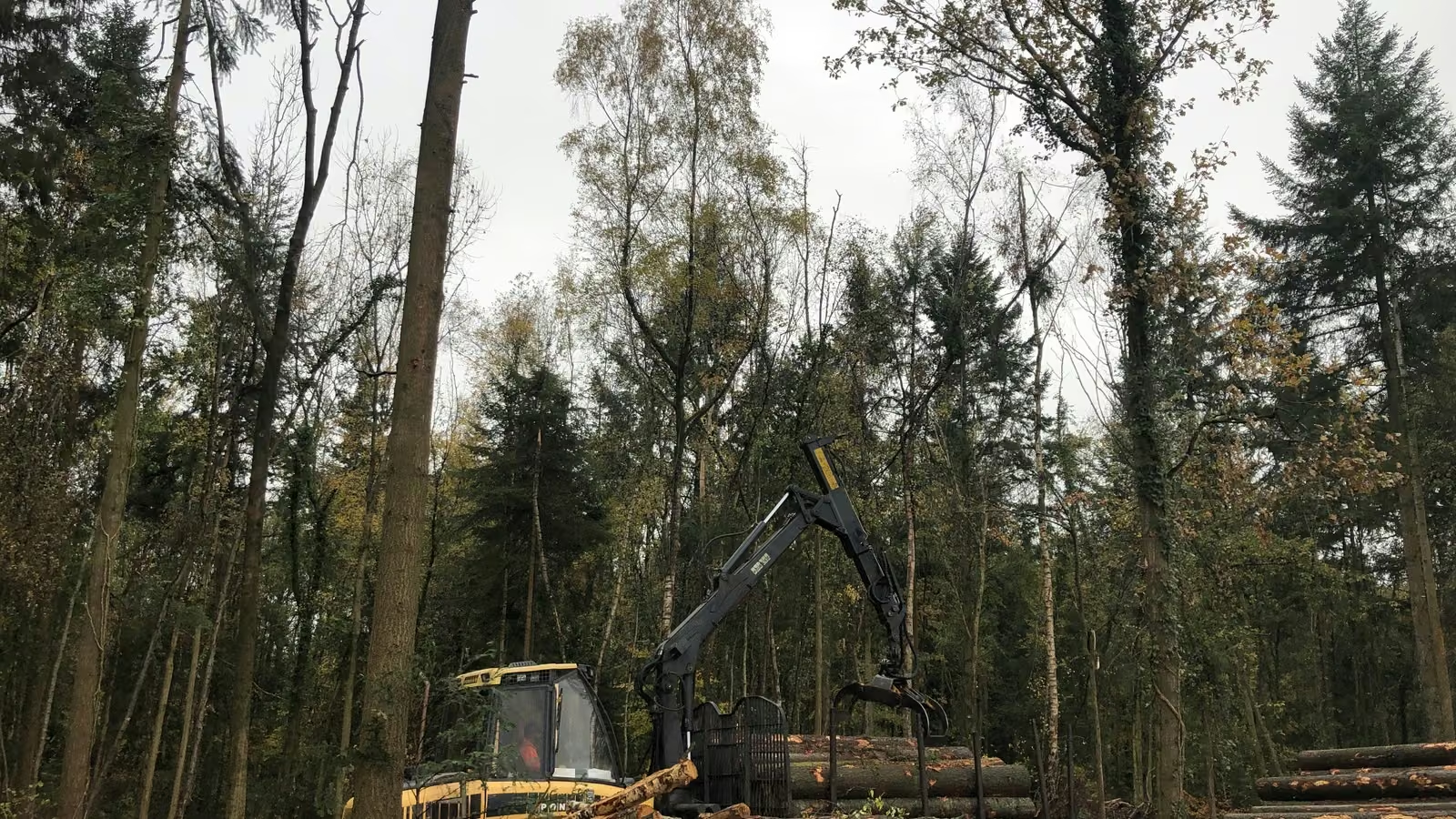
Before work begins, the forester or woodland manager should hold a pre-commencement meeting with the contractor. The team should confirm licensed boundaries, retained habitats, exclusion zones, machine access, extraction routes, product specifications, stacking areas, ground-condition limits, pollution controls, emergency arrangements and inspection requirements.
The operation should then be monitored. Supervision may include checking stump positions, retained-tree damage, rutting, water protection, product recovery, roadside stacks, haulage records and progress against the specification.
The UK Forestry Standard applies to woodland management and harvesting across the UK. It covers biodiversity, soil, water, climate, landscape, the historic environment and people. Regulatory processes and responsible bodies vary between England, Scotland, Wales and Northern Ireland.
What happens after the timber is removed?
The work does not necessarily finish when the last timber lorry leaves. Post-harvesting requirements may include repairing extraction routes, restoring drains and water crossings, repairing fences and gates, recording completed felling, checking remaining stands for instability, managing pests and establishing replacement woodland.
Where the felling licence contains restocking conditions, those obligations must be completed and the replacement trees or regeneration maintained for the required period.
The timber income is therefore only one part of the financial picture. Access, supervision, reinstatement, restocking, protection and future maintenance must all be included when estimating the owner's likely net return.
Is every woodland timber sale profitable?
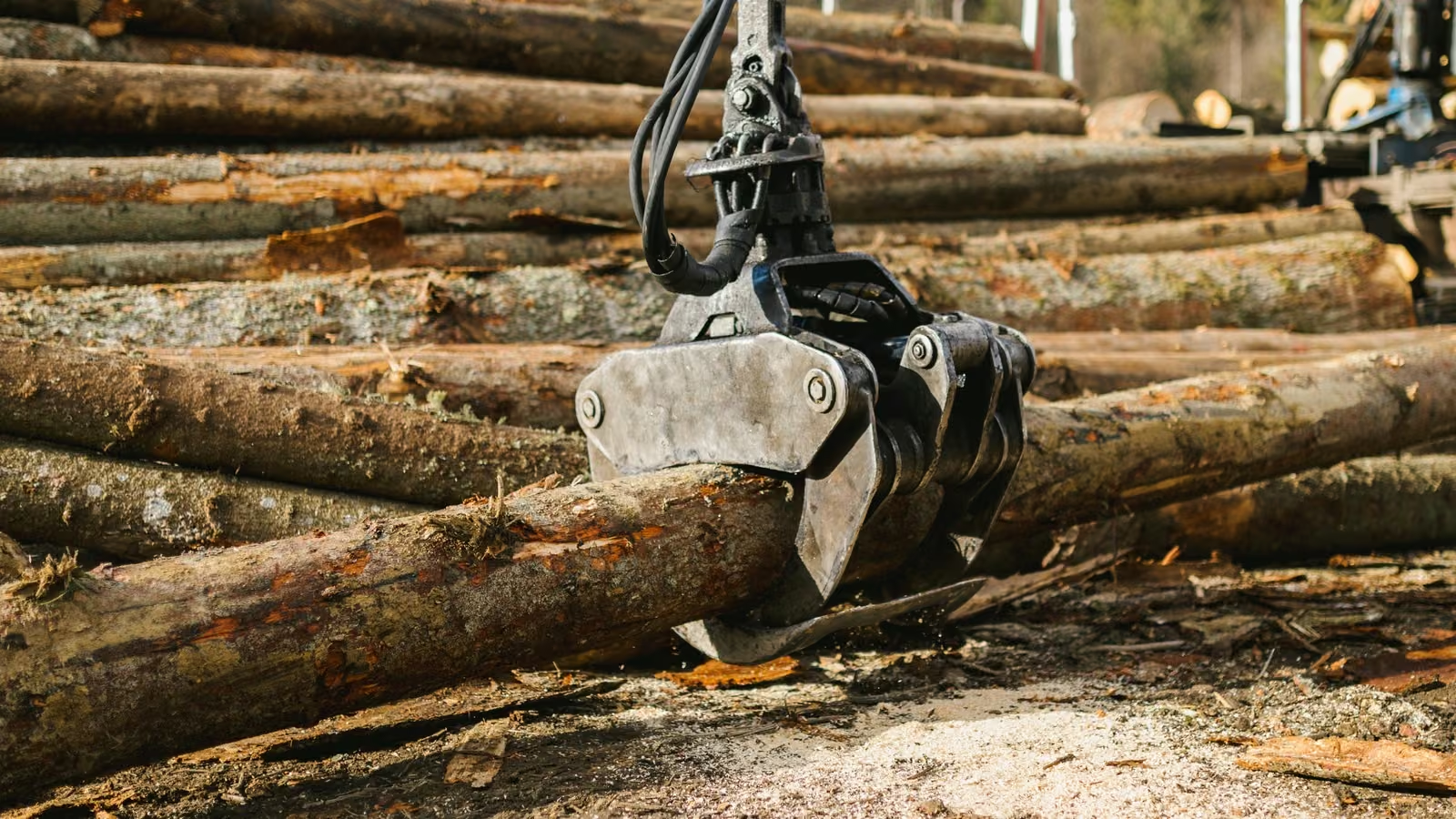
No. Some woodland operations generate a strong return. Others may only cover part of the cost of bringing the woodland back into management. Small volumes, poor access, low-quality stems, difficult terrain and substantial reinstatement requirements can make harvesting marginal or uneconomic.
That does not necessarily mean the work should not happen. Thinning, coppicing or selective felling may improve retained trees, restore neglected coppice, manage disease or instability, support regeneration, increase structural diversity or help create a more resilient woodland.
A professional appraisal should separate the gross timber value from the full cost and wider benefit of the woodland operation.
Frequently asked questions
How much is timber from a woodland worth?
There is no dependable price per tree or acre. Value depends on measured volume, species, stem size and quality, product recovery, access, harvesting and haulage costs, current markets and the sale terms. A crop inventory and site appraisal are needed before a realistic net return can be estimated.
Do I need a felling licence before selling timber?
The sale can be prepared while an application is being determined, but felling must not begin until the required licence and any other permissions are in place. Everyone involved should check the authorised trees, boundaries and conditions before work starts.
Is it better to sell timber standing or at roadside?
Neither route is automatically better. A standing sale usually transfers more production risk to the purchaser, while a roadside sale gives the owner greater control over products and marketing but requires working capital and closer operational management.
Can timber from a small woodland be sold?
Yes, but fixed mobilisation and haulage costs can absorb much of the value. Small parcels need suitable access, clearly defined products and realistic local markets; in some cases the timber income will only contribute towards necessary management costs.
Who is responsible for restocking after a timber sale?
The sale contract should allocate the work and cost clearly, but statutory restocking conditions attach to the land. The owner must ensure they are completed and maintained, even where a buyer or contractor undertakes the physical work.
The practical next step
If you believe your woodland contains saleable timber, begin with an independent woodland assessment. A forester can determine:
- whether felling is silviculturally appropriate;
- what permissions and surveys are required;
- what volume and products may be available;
- whether a standing or roadside sale is more suitable;
- how the timber should be marketed;
- what harvesting, reinstatement and restocking will cost; and
- what realistic net return the owner might expect.
Tomorrow's Forests provides woodland management, timber marketing and harvesting services across England. Our foresters can assess and measure the crop, prepare mapping and felling applications, obtain competitive offers, appoint and supervise contractors, manage timber movements and coordinate the required restocking and aftercare.
Contact Tomorrow's Forests to arrange an initial assessment of your woodland and its timber potential.