

Thinning is the selective removal of trees from an established woodland to give the remaining trees more room, light and resources.
Done well, it can improve timber quality, encourage stronger crowns, support natural regeneration and create a more varied woodland structure. Done at the wrong time or with the wrong intensity, it can expose unstable trees, damage soils and leave an owner with considerable activity but very little improvement.
A woodland is not ready for thinning merely because somebody has acquired a chainsaw.
The decision should follow an assessment of the crop, species, stocking, soils, exposure, access, environmental constraints and the owner's objectives. It also needs to consider what will happen to the timber and whether the operation can be delivered practically.
What does woodland thinning involve?
In conventional forestry terms, thinning removes selected trees from across an established woodland while retaining the woodland canopy and the main crop.
The objective is normally to reduce competition and direct future growth towards the trees best suited to remain. These may be selected for their form, health, timber potential, species, habitat value or contribution to the future woodland structure.
Thinning is different from clearfelling, where most or all of a defined crop is removed before the area is restocked or regenerated. It is also different from indiscriminate tidying. Deadwood, veteran trees, damaged stems and dense patches can all have ecological value, provided they do not create unacceptable risks or prevent the woodland from meeting its objectives.
Trees are patient competitors. They can spend several decades arguing over the same patch of sunlight, but that does not mean the eventual winner will be valuable, stable or particularly impressive.
Why are woodlands thinned?
To concentrate growth on better trees
In a densely stocked crop, trees compete for light, water, nutrients and growing space. Removing selected competitors allows retained trees to develop larger crowns and increase their diameter.
Where timber production is an objective, thinning can concentrate future growth on straighter, healthier and better-formed stems. It does not make trees grow taller on command; its main effect is to redirect growing space towards the retained crop.
To improve woodland structure
Carefully planned thinning can create different light conditions, retain a mixture of species and begin developing a more varied woodland. It may form part of a longer-term transition towards continuous-cover forestry, where smaller interventions are used and regeneration is encouraged beneath or between the retained canopy.
That transition takes planning. Removing a few trees and hoping that continuous cover will organise itself is not a silvicultural system.
To encourage regeneration and ground vegetation
Opening the canopy can allow more light to reach the woodland floor, but the response is not guaranteed. If browsing pressure is high, the new growth may simply provide deer with a better-lit dining area. Bramble, bracken or other competing vegetation may also respond faster than tree seedlings.
Before thinning specifically for regeneration, the seed source, ground conditions, vegetation and browsing pressure should be assessed.
To improve resilience
Early and appropriate thinning can help trees develop stronger stems, crowns and root systems. It also provides opportunities to favour suitable species, improve structural diversity and prepare a woodland for future climate and pest risks.
Thinning is not automatically beneficial on every exposed site. Late intervention in an unstable crop can increase vulnerability to windthrow by suddenly exposing trees that developed in a tightly sheltered stand.
How can you tell whether a woodland needs thinning?
There is no single age at which every woodland becomes ready. Useful indicators include:
- Crowns becoming restricted or compressed
- Large numbers of suppressed or poorly formed trees
- Limited diameter growth in the intended final crop
- Excessive competition around selected trees
- A dense, uniform canopy with little structural diversity
- Previously planned thinning operations being overdue
- Natural regeneration failing because insufficient light reaches the ground
- Access racks or earlier extraction routes disappearing into the crop
- Increasing windblow, damage or disease
- A need to alter the species mix or begin restructuring the stand
These signs do not prove that immediate thinning is correct. They show that the woodland needs inspecting.
Measurements may include tree diameter, stocking density, basal area, top height, species composition and recent growth. A forester should also consider soils, slope, exposure, previous management and the intended rotation or silvicultural system.
When should a woodland be thinned?
Forestry Commission definitions describe thinning as normally taking place on cycles of approximately five years for conifers and ten years for broadleaves. These are useful general descriptions, not universal prescriptions.
Actual timing varies with species, growth rate, yield class, initial spacing, current stocking, crown development, soils, drainage, exposure, management objectives and previous thinning history. Timber markets and contractor availability affect delivery, but they should not replace a silvicultural assessment.
Why first thinning matters
The first thinning can be particularly important because it establishes access and begins concentrating growth on the intended crop. If a stand remains densely stocked for too long, trees may become tall and slender with restricted crowns.
A heavy late thinning can then expose stems that have not developed the stability needed for their new surroundings. In some stands, the safer decision may be a lighter intervention, restructuring over several entries, delayed work or no thinning before final felling. The correct approach depends on the crop's present condition and risk profile, not the date originally written in a management plan.
What types of woodland thinning are used?
Systematic or rack thinning
Rows or racks are removed to create access for machinery and extraction. This is common during first thinning in regularly planted conifer crops. Rack removal provides access but does not necessarily produce the best silvicultural selection by itself, so it is often combined with selective removal between the racks.
Selective thinning
Individual trees are selected according to the objectives of the operation. These might include suppressed, damaged, diseased or poorly formed trees, or trees competing directly with selected final-crop stems. Selection should not simply remove everything small or inconvenient; subordinate trees, alternative species, deadwood and habitat features may be deliberately retained.
Crown thinning
Trees competing with the crowns of selected better-quality stems are removed. This gives the retained trees more room to develop while maintaining a broader range of tree sizes beneath them.
Low thinning
Smaller, suppressed and lower-canopy trees are removed first. This can suit some even-aged stands but may have less effect on competition between dominant trees if used without clear objectives.
The method and intensity should be specified before work starts. 'Take out the bad ones' may sound clear at the gateway but becomes surprisingly subjective once several contractors are standing among thousands of trees.
How much should be removed?
There is no safe percentage that can be applied to every woodland.
Current Forestry Commission definitions indicate that a conventional thinning operation will typically remove no more than 30% of the trees or original canopy cover in a single intervention. The same guidance makes clear that this is a definition, not an automatic limit or recommendation.
Suitable intensity depends on crop stability, species, exposure, crown condition, soils and the desired future structure. Removing too little may fail to release the intended trees or justify mobilisation. Removing too much can increase wind risk, encourage unwanted vegetation, alter woodland conditions too abruptly and reduce future options.
Trees or racks should therefore be marked, or the selection rules made unmistakably clear, before production begins.
Does woodland thinning require a felling licence?
Most operational thinning in England will require a Forestry Commission felling licence unless a specific exemption applies.
Small-volume and other exemptions exist, but they should not be assumed without checking the current rules. Felling without a licence where one was required is an offence, and responsibility is not limited to the person operating the saw or harvester.
A thinning-only felling licence will usually be unconditional and will not normally require restocking because the woodland canopy is retained. Different conditions may apply if the proposal includes other forms of felling.
A felling licence does not remove the need to identify other legal and environmental constraints. Tree Preservation Orders and conservation-area status must be declared and checked because they can affect the correct application route. Where a felling licence is required for TPO-protected trees, the Forestry Commission will normally consult the relevant local authority as part of its decision.
Other checks may include:
- Sites of Special Scientific Interest
- Ancient woodland, veteran trees and protected species
- Active nests and seasonal ecological constraints
- Scheduled monuments and other historic features
- Public rights of way, utilities and neighbouring property
- Watercourses, drains, wet ground and sensitive soils
These checks should be completed before trees are marked and contractors are booked, not after the machinery has arrived.
Will a thinning operation make money?
Possibly - but the woodland's need for thinning and the operation's commercial viability are two separate questions.
Income depends on the volume and average stem diameter removed, species, timber quality, available products and current markets. Costs depend on harvesting, extraction, ground conditions, terrain, access, stacking space, haulage, mobilisation and the scale and layout of the operation.
Early thinnings often produce smaller-diameter material with relatively low value per tonne. A site may genuinely need thinning while generating little or no net income after harvesting, extraction and haulage. Conversely, a well-stocked, accessible woodland with sufficient volume and suitable markets may produce a worthwhile return while improving the retained crop.
Timber buyers tend to be more interested in measurable volume, usable access and saleable products than heroic descriptions of how difficult the site is.
Before work is offered to the market, the crop should be measured and the likely products, volumes and costs assessed. Timber can then be sold standing or harvested and marketed at roadside, depending on the scale, risks and preferred commercial arrangement.
What should be planned before thinning starts?
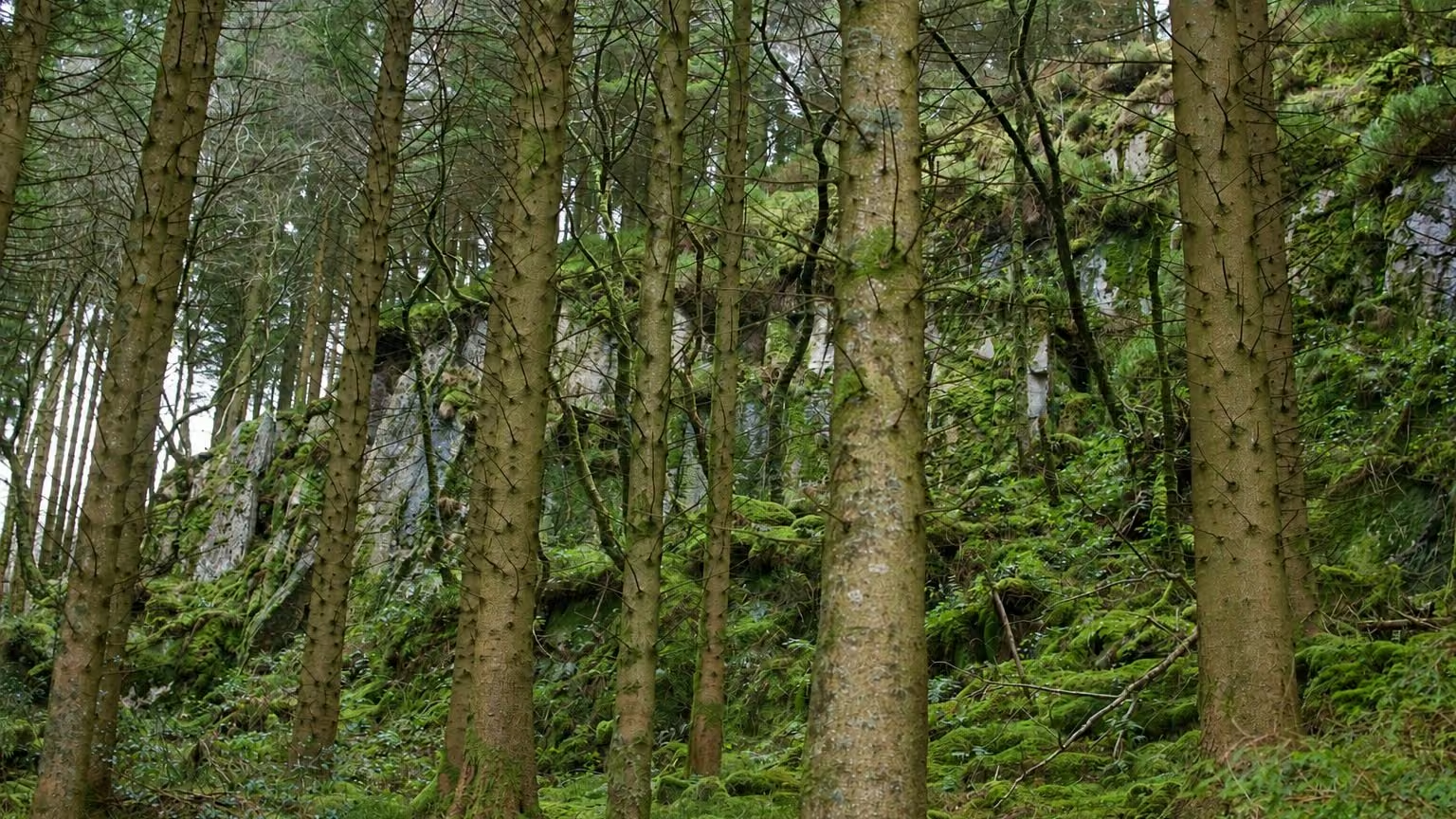
A competent thinning operation requires more than choosing which trees to remove.
- Define the objective and identify the trees and habitat features to retain.
- Record species, areas, stocking, measurements, estimated volume and expected timber products.
- Mark trees or racks, or issue clear selection rules that can be checked during the work.
- Confirm machine access, extraction routes, bridges, culverts, stacking areas and timber-lorry access.
- Map watercourses, sensitive soils, habitats, protected features and exclusion zones.
- Secure the felling licence and any additional permissions before work starts.
- Match the equipment and working method to the crop, terrain, soil and operation scale.
- Plan around ecological constraints and stop operations if weather or ground conditions make damage unacceptable.
- Identify likely timber products and markets before cutting begins.
- Inspect retained trees, routes, drains, entrances and stacking areas during and after the work.
Extraction must also be planned to minimise bark, stem and root damage to retained trees. Releasing the best stems and then damaging them with machinery is a particularly inefficient form of woodland management.
A line on a map may look like an efficient extraction route. After several days of rain and repeated forwarder movements, it may reveal that it was actually an expensive drainage experiment.
What happens after thinning?
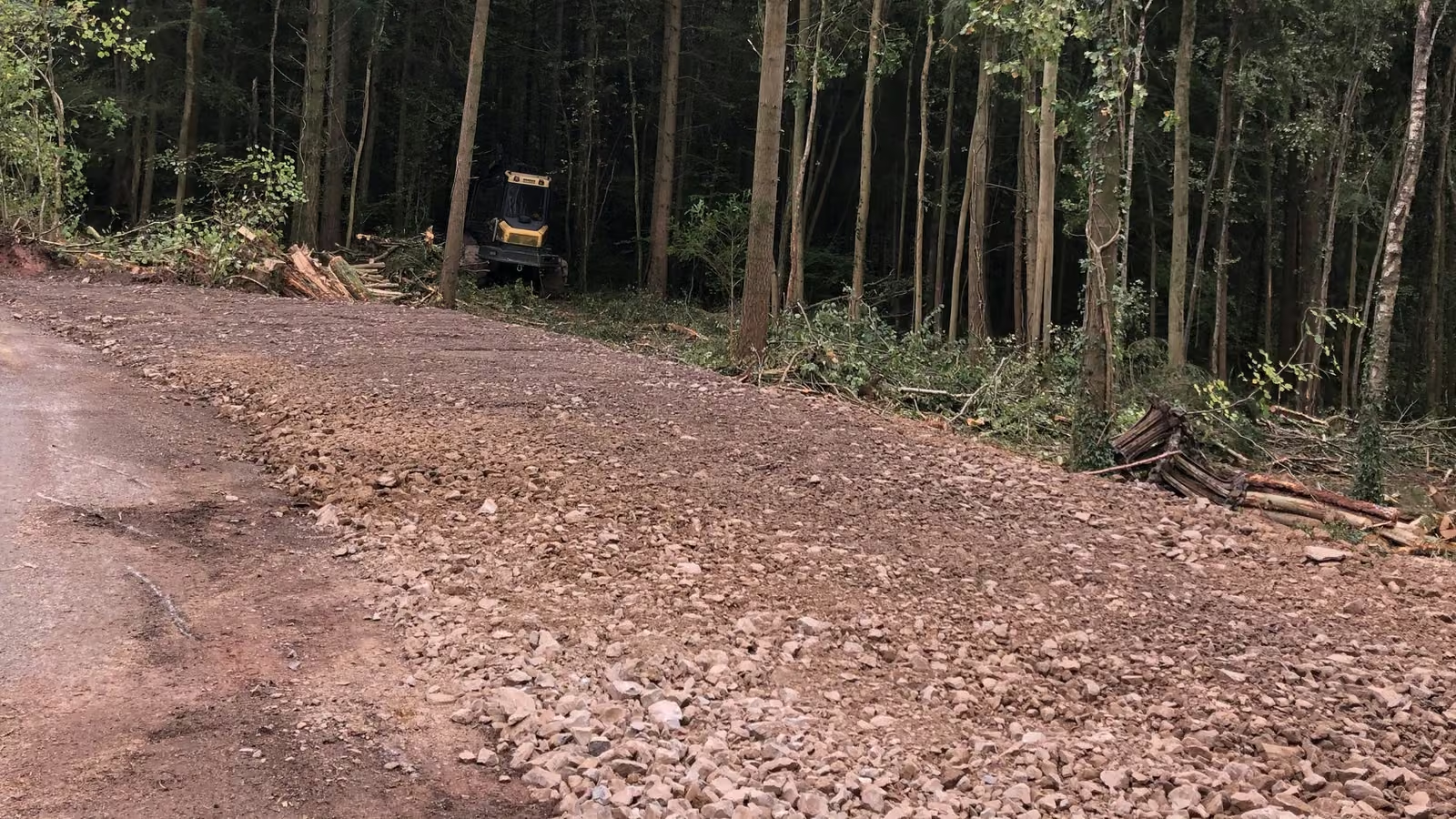
The woodland should be inspected once the operation is complete. Checks should cover damage to retained trees, rutting, drains and watercourses, access routes, timber and waste removal, newly exposed edges, regeneration, browsing and competing vegetation.
Thinning is usually one stage in a longer management programme. The response of the crop and woodland floor should inform the timing and intensity of the next intervention.
Frequently asked questions
Is thinning the same as clearfelling?
No. Thinning removes selected trees while retaining the main woodland crop and canopy. Clearfelling removes most or all trees within a defined area before restocking or regeneration.
How often should woodland be thinned?
Forestry Commission definitions refer to typical cycles of around five years for conifers and ten years for broadleaves. Actual timing must be based on species, growth, stocking, stability, site and management objectives.
Can thinning improve biodiversity?
It can create varied light levels, encourage regeneration and improve structural diversity. The result depends on what is removed, what is retained and how browsing, deadwood, habitats and sensitive features are managed.
Does every woodland benefit from thinning?
No. Some stands are too exposed, unstable, inaccessible or environmentally sensitive for conventional thinning. Other woodlands may need a different form of management or no immediate intervention.
Will the timber pay for the operation?
Sometimes. The result depends on volume, diameter, timber quality, markets, access, terrain, haulage and mobilisation costs. A crop assessment and outline appraisal should be completed before income is assumed.
Do I need a felling licence for thinning?
Usually, yes, unless a valid exemption applies. Current Forestry Commission guidance should be checked before any trees are felled.
The practical next step
If you think a woodland may be ready for thinning, begin with a crop and access assessment rather than requesting a harvesting quotation from photographs.
The assessment should establish whether thinning is silviculturally appropriate, whether the crop is stable enough to open, which trees should remain, what timber products and volumes may be available, whether access and extraction are workable, what permissions and ecological checks are required, and whether the operation is likely to generate income or require investment.
If your woodland has missed a thinning, or you are unsure whether intervention is still appropriate, Tomorrow's Forests can assess the crop, access, constraints and likely timber value before work is commissioned. We provide woodland planning, felling-licence support, harvesting management and timber marketing across England.